

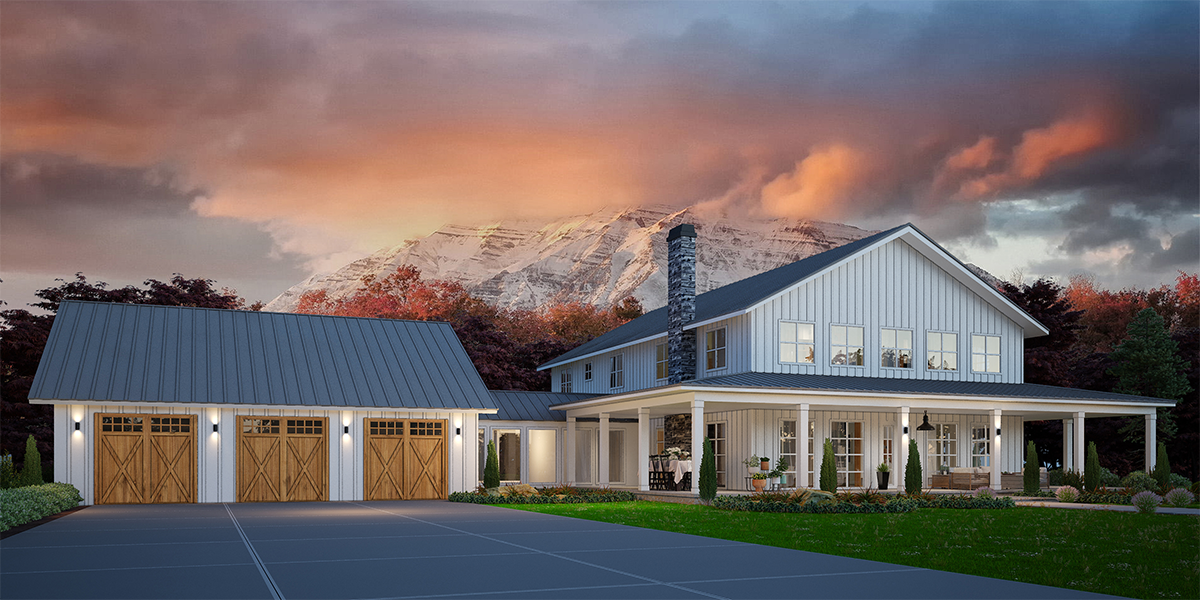
Barndominium vs. Tiny Home: Which One Is Right for You?
If you are trying to build a more affordable, efficient, and intentional home, you may be comparing two very popular options: a barndominium vs. a tiny home. Both offer a different approach to traditional housing, and both appeal to buyers who want something more flexible than a standard subdivision house.
A tiny home is usually focused on minimal square footage, lower living expenses, and a simplified lifestyle. A barndominium is typically focused on open living space, durability, customization, land use, garage space, shop space, and long-term flexibility.
The right choice depends on your budget, land, lifestyle, family size, storage needs, financing goals, local zoning rules, and how you plan to live in the home every day.
At Barndominiums.com, we specialize in helping homeowners find practical barndominium plans, explore barndominium kits, and connect with barndominium builders who understand how to bring a barndo project together from plan to construction.
What Is a Barndominium?
A barndominium is a custom home inspired by barn-style architecture, but modern barndominiums are much more than barns with living quarters. Today’s barndominiums can include open floor plans, vaulted ceilings, large kitchens, covered porches, attached garages, shops, RV bays, lofts, bonus rooms, and high-end finishes.
Some barndominiums are built with steel frame kits, post-frame construction, metal building systems, or conventional wood framing. This flexibility makes them attractive to homeowners who want a custom home that can be adapted around land, budget, storage, lifestyle, and long-term needs.
A barndominium can be small and efficient, or it can be a large family home with multiple bedrooms, garage space, and outdoor living areas.
What Is a Tiny Home?
A tiny home is a very small dwelling designed around minimal square footage and efficient use of space. Many tiny homes are under 400 square feet, although some are larger depending on local rules and how the term is used.
Tiny homes are often designed for people who want to downsize, reduce expenses, simplify their lifestyle, or live with fewer possessions. Some tiny homes are built on permanent foundations, while others are built on trailers and designed to be movable.
A tiny home can be a smart option for the right buyer, but it also comes with major limitations. Space, storage, financing, zoning, resale value, and long-term comfort can all become challenges if the home is too small for your lifestyle.
Barndominium vs. Tiny Home: The Big Difference
The biggest difference between a barndominium and a tiny home is long-term flexibility.
A tiny home is built around reducing space. A barndominium is built around using space differently.
With a tiny home, the goal is usually to live with less. With a barndominium, the goal is usually to live more efficiently while still having room for family, guests, storage, hobbies, vehicles, equipment, pets, or a home-based business.
That makes barndominiums a better fit for many buyers who want affordability and efficiency but do not want to sacrifice everyday comfort.
Size Comparison: Barndominium vs. Tiny Home
Size is the most obvious difference between these two home types.
A tiny home is usually very compact. It may include a small kitchen, bathroom, sleeping loft, living area, and limited storage. For one person or a couple, that may be enough. For a family, guests, pets, hobbies, tools, or long-term living, the space can feel restrictive.
A barndominium can be designed in many different sizes. Some buyers choose small barndominium plans around 1,000 to 1,500 square feet, while others choose larger family layouts with 2,000, 2,500, or 3,000+ square feet.
Popular barndominium sizes include:
- 1,200 square foot barndominiums
- 1,500 square foot barndominiums
- 2,000 square foot barndominiums
- 2,500 square foot barndominiums
- 3,000+ square foot barndominiums
- 30x40 barndominiums
- 40x60 barndominiums
- 60x80 barndominiums with shop space
If you want a smaller home but still need real bedrooms, a full kitchen, laundry space, storage, and room to grow, a small barndominium may be a better compromise than a tiny home.

Cost Comparison: Is a Tiny Home Cheaper Than a Barndominium?
A tiny home can cost less overall because it is much smaller. Less square footage usually means less framing, roofing, siding, insulation, flooring, drywall, fixtures, and labor. However, cheaper does not always mean better value.
Tiny homes can have a surprisingly high cost per square foot because kitchens, bathrooms, mechanical systems, built-ins, custom storage, trailer frames, and specialty compact features are all packed into a very small space.
A barndominium will usually cost more in total because it is larger, but it can offer more value per square foot, more usable living space, better storage, and stronger long-term flexibility.
When comparing costs, think beyond the starting price. Ask yourself:
- How much finished living space do I actually need?
- Will I need storage buildings later?
- Will I outgrow the home quickly?
- Can the home be financed easily?
- Will it appraise well?
- Will it work for future resale?
- Can it meet local zoning and code requirements?
A tiny home may win on lowest upfront cost. A barndominium often wins on long-term usability.
Which One Is Easier to Finance?
Financing can be one of the biggest differences between a barndominium and a tiny home.
A barndominium is typically financed like a custom residential home, especially when it is built on a permanent foundation with professional plans, a qualified builder, and a clear construction budget. Lenders may still ask questions about the building system, appraisal, and construction method, but a well-planned barndominium can often fit into a construction loan or construction-to-permanent loan process.
A tiny home can be harder to finance, especially if it is on wheels, not attached to permanent land, or classified more like a recreational vehicle than a traditional house. Some buyers may need personal loans, RV loans, cash, or specialty financing.
If financing matters, a permanent barndominium with professional plans may be easier to present to lenders than a movable tiny home.
If you are preparing to finance a barndominium, read our guide on Barndominium Construction Loans: What Lenders Want to See.
Land and Zoning: Which One Is Easier to Place?
Land and zoning rules can make or break either option.
Tiny homes may face zoning challenges because some areas have minimum square footage requirements, foundation requirements, or restrictions on homes built on wheels. A tiny home may be allowed as an accessory dwelling unit in some places, but not as a primary residence in others.
Barndominiums also need to meet zoning and building rules, but they are often easier to frame as a residential home when they are designed as a permanent dwelling with professional plans and a proper foundation.
Before buying land for either option, ask:
- Is residential construction allowed?
- Is there a minimum home size?
- Are metal-sided homes allowed?
- Are tiny homes allowed as primary residences?
- Are homes on wheels allowed?
- Are accessory dwelling units allowed?
- Are there HOA or deed restrictions?
- Is septic or sewer available?
- Is public water available?
- Is power available nearby?
- Will the driveway or site work be expensive?
In many rural areas, a barndominium may be easier to plan as a long-term residence than a tiny home, especially if you want a full-size home that meets residential expectations.
Storage: The Hidden Deal Breaker
Storage is one of the biggest reasons tiny home living does not work for everyone.
A tiny home may force you to downsize aggressively. That can be great if you truly want minimal possessions, but it can become frustrating if you need tools, seasonal items, hobby gear, pantry storage, sports equipment, pet supplies, work equipment, or room for children’s belongings.
Barndominiums are much stronger for storage because they can include:
- Walk-in pantries
- Mudrooms
- Laundry rooms
- Attic storage
- Garages
- Attached shops
- RV bays
- Equipment storage
- Closets and built-ins
If you want a simpler lifestyle but still need practical storage, a barndominium is usually the better choice.
Barndominium vs. Tiny Home for Families
For most families, a barndominium is far more practical than a tiny home.
Tiny homes can work for singles or couples, but families often need separate bedrooms, more bathroom space, laundry space, storage, a real kitchen, and private areas for children, guests, or work-from-home needs.
A barndominium can be designed with:
- 3 or 4 bedrooms
- Multiple bathrooms
- Open family living areas
- Large kitchens
- Walk-in pantries
- Covered porches
- Playrooms or lofts
- Home offices
- Garages or shops
If you are building for a growing family, compare 3-bedroom house plans and 4-bedroom house plans before deciding whether tiny living is realistic.
Barndominium vs. Tiny Home for Retirees
Both options can appeal to retirees, but for different reasons.
A tiny home may be appealing if you want to downsize dramatically, reduce possessions, travel more, or live with very low overhead. It can be a good fit for someone who truly wants minimal space and minimal maintenance.
A barndominium may be a better fit if you want one-level living, room for guests, space for hobbies, a garage, a workshop, or acreage. Many retirees want to simplify, but they do not necessarily want to live in a few hundred square feet.
A small one-story barndominium can offer a strong middle ground: less maintenance than a large traditional home, but far more comfort and flexibility than a tiny home.
If one-level living is important, browse the ranch house plans collection for layouts that may work better long term.
Barndominium vs. Tiny Home for Rural Landowners
Rural landowners often need more than just a small place to sleep. They may need room for tools, tractors, animals, side-by-sides, trailers, hunting gear, gardening equipment, vehicles, or a home-based business.
That is where a barndominium has a major advantage.
A barndominium can combine residential living with practical space. It can include a garage, shop, equipment bay, mudroom, utility room, and covered outdoor areas. A tiny home may require additional outbuildings to handle those needs, which can reduce the cost advantage.
If your land is part of your lifestyle, a barndominium will usually support that lifestyle better.

Barndominium vs. Tiny Home with Shop Space
This is one of the easiest comparisons: if you need shop space, a barndominium is usually the better fit.
A tiny home may work as a living space, but it does not naturally solve the need for workshop space, vehicle storage, equipment storage, or hobby space. You may need to build a separate garage, barn, or shop later.
A barndominium can be designed from the beginning with shop space included or connected. This can make the overall property more functional and easier to plan.
Shop space can be used for:
- Mechanic work
- Woodworking
- Small business use
- Equipment storage
- Vehicle storage
- RV or boat storage
- Hobby space
- Farm or homestead storage
If you need a home and a serious workspace, a barndominium is usually the smarter long-term investment.
Comfort and Daily Living
Tiny homes require major lifestyle discipline. Every item needs a place. Every room may need to serve multiple purposes. Privacy can be limited. Guests can be difficult. Cooking, laundry, storage, and sleeping arrangements may require compromise.
Some people love that. Others find it exhausting after the excitement wears off.
A barndominium gives you more breathing room. You can still build efficiently, but you do not have to compress every part of life into a tiny footprint. You can have a real kitchen, a private bedroom, full-size bathrooms, a laundry room, covered porches, and storage space.
For everyday comfort, the barndominium usually wins.
Maintenance Comparison
Tiny homes may seem easier to maintain because they are smaller, and in many ways, they are. Less square footage means less cleaning, fewer materials, and less interior upkeep.
However, tiny homes can also use specialized parts, compact appliances, trailer systems, loft ladders, and custom built-ins that may not be as easy to repair or replace.
Barndominiums have more square footage to maintain, but they can be built with durable materials such as metal roofing, metal siding, steel framing, concrete slabs, and practical finishes. A well-designed barndominium can be low maintenance compared to many traditional homes.
The best option depends on whether you want the smallest possible home or a durable long-term residence with more function.
Energy Efficiency
A tiny home uses less energy because it is small. Heating and cooling a tiny home usually costs less than heating and cooling a larger home.
However, a barndominium can also be energy efficient when designed correctly. Insulation, air sealing, HVAC sizing, window placement, roof design, and building orientation all matter.
A smaller barndominium with good insulation and efficient systems can offer a strong balance between comfort and operating cost.
Resale Value and Long-Term Appeal
Resale is another important difference.
Tiny homes appeal to a smaller group of buyers. Some people love the lifestyle, but others see it as too restrictive. Financing and zoning can also make resale harder in some markets.
Barndominiums often have broader appeal when they are built as true residential homes with strong curb appeal, practical layouts, real bedrooms, garages, and quality finishes.
A barndominium with land, a shop, a garage, and a functional floor plan may attract buyers who want rural living, a custom home, hobby space, or a home business setup. That can make it more versatile than a tiny home.
When a Tiny Home Makes More Sense
A tiny home can be the right choice if you truly want a minimalist lifestyle and do not need much space.
A tiny home may make sense if:
- You are single or a couple with minimal possessions
- You want the smallest possible footprint
- You do not need a garage or shop
- You are comfortable with limited storage
- You want a guest house or secondary dwelling
- Your local zoning allows tiny homes
- You are paying cash or have specialty financing
- You want to travel or relocate the home if it is on wheels
For the right person, a tiny home can be freeing. The key is being honest about whether you want tiny living or just a more affordable home.
When a Barndominium Makes More Sense
A barndominium usually makes more sense if you want efficiency without giving up real living space.
A barndominium may be the better choice if:
- You need 2, 3, or 4 bedrooms
- You want a full-size kitchen
- You need real storage
- You want a garage or shop
- You own or plan to buy acreage
- You want a permanent residential home
- You plan to finance the build
- You want better long-term resale flexibility
- You need room for hobbies, tools, pets, or family
- You want a custom layout that can grow with your needs
If you want a home that feels efficient but still functions like a real full-time residence, a barndominium is usually the stronger choice.
Small Barndominiums: The Middle Ground
The best alternative to a tiny home may not be a huge barndominium. It may be a small barndominium.
A small barndominium can give you the efficiency you want without forcing you into extreme minimalism. You can still keep the footprint simple, reduce costs, and build something easier to maintain while keeping real bedrooms, a full kitchen, laundry space, storage, and outdoor living.
Small barndominiums can work well for:
- Couples
- Retirees
- Small families
- Vacation homes
- Guest homes
- Rural landowners
- Budget-conscious buyers
If you like the idea of tiny living but want more comfort, a small barndominium may be the better long-term solution.
Can You Customize a Barndominium Like a Tiny Home?
Yes. One of the reasons tiny homes became popular is because they are highly personalized. But barndominiums can also be customized around your lifestyle.
You can modify a barndominium plan to adjust:
- Square footage
- Bedroom count
- Bathroom layout
- Kitchen size
- Pantry space
- Garage layout
- Shop space
- Porches
- Exterior style
- Foundation type
- Ceiling heights
If you find a plan that is close but not perfect, Barndominiums.com can help with custom house plans and plan modifications.

Barndominium vs. Tiny Home: Quick Comparison
| Category | Barndominium | Tiny Home |
|---|---|---|
| Typical Size | Small to large custom home | Very small compact home |
| Best For | Families, landowners, retirees, shop owners, rural living | Singles, couples, minimalists, guest homes |
| Storage | Strong storage potential | Very limited storage |
| Garage or Shop | Easy to include | Usually requires separate building |
| Financing | Often treated like custom residential construction | Can be harder, especially if on wheels |
| Zoning | Must meet residential rules | Can face minimum-size or mobile-unit restrictions |
| Long-Term Flexibility | High | Limited |
| Lowest Upfront Cost | Usually higher total cost | Usually lower total cost |
| Daily Comfort | More space and privacy | Requires major downsizing |
Common Mistakes When Comparing Barndominiums and Tiny Homes
Mistake 1: Only Comparing Upfront Cost
A tiny home may cost less upfront, but it may not give you the space, financing options, resale appeal, or long-term comfort you need.
Mistake 2: Ignoring Zoning Rules
Both barndominiums and tiny homes need to comply with local rules. Tiny homes can be especially tricky if the area has minimum square footage requirements or restrictions on movable dwellings.
Mistake 3: Underestimating Storage Needs
Storage is easy to overlook until you live without it. If you own tools, equipment, seasonal items, outdoor gear, or hobby supplies, a tiny home may become frustrating quickly.
Mistake 4: Thinking a Tiny Home Is Always Easier
A tiny home is smaller, but that does not always make it simpler. Financing, zoning, insurance, utilities, and long-term comfort can still be complicated.
Mistake 5: Building Too Much Barndominium
A barndominium does not need to be huge. If affordability is the goal, choose a simple, efficient plan that gives you enough space without unnecessary square footage.
Final Thoughts: Is a Barndominium or Tiny Home Better?
A tiny home is a good fit for people who truly want to live small, own fewer things, and keep their footprint as compact as possible. It can work well for singles, couples, guest homes, vacation properties, or minimalists who are comfortable with limited storage and limited space.
A barndominium is usually the better fit for buyers who want flexibility, storage, full-time comfort, land use, garage space, shop space, and a stronger path toward long-term residential living.
The best choice depends on what you actually need. If your goal is the smallest possible home, a tiny home may make sense. If your goal is an efficient custom home with room to live, work, store, and grow, a barndominium may be the smarter long-term choice.
FAQ: Barndominium vs. Tiny Home
Is a barndominium cheaper than a tiny home?
A tiny home is usually cheaper in total because it is much smaller. However, a barndominium may offer better long-term value because it provides more living space, storage, financing options, garage space, and resale flexibility.
Is a tiny home easier to finance than a barndominium?
Not always. Tiny homes can be harder to finance, especially if they are on wheels or not considered permanent residential dwellings. A barndominium built on a permanent foundation with professional plans may be easier to present as a custom home.
Can a barndominium be small like a tiny home?
Yes. Barndominiums can be designed in smaller sizes. A small barndominium can give you an efficient footprint while still offering real bedrooms, a full kitchen, laundry space, storage, and better long-term comfort.
Which is better for families, a barndominium or tiny home?
For most families, a barndominium is better because it can include multiple bedrooms, bathrooms, storage, laundry space, a full kitchen, and outdoor living areas. Tiny homes are usually better suited for singles, couples, or minimalist living.
Which is better for rural land?
A barndominium is usually better for rural land because it can include garage space, shop space, equipment storage, mudrooms, and porches. A tiny home may require separate outbuildings to meet the same needs.
Do tiny homes have zoning problems?
They can. Some areas have minimum square footage requirements, foundation requirements, or restrictions on homes built on wheels. Always check local zoning before buying land or purchasing a tiny home.
Do barndominiums have zoning problems?
Barndominiums must also meet local zoning and residential building rules. However, when designed as permanent residential homes with proper plans and foundations, they may be easier for building departments and lenders to understand.
Can a barndominium include a shop?
Yes. One of the biggest advantages of a barndominium is the ability to include a garage, shop, RV bay, equipment storage, or hobby space as part of the overall design.
Which has better resale value?
A well-built barndominium may have broader resale appeal than a tiny home because it functions more like a full residential home. Tiny homes appeal to a smaller buyer pool and may face more financing or zoning limitations.
What is the best alternative to a tiny home?
A small barndominium can be a strong alternative to a tiny home. It gives buyers a more efficient home without forcing extreme downsizing or sacrificing comfort, storage, and long-term flexibility.
Browse Barndominium Plans, Kits, and Builders
Ready to compare efficient barndominium designs? Start with real plans, then explore kits and builders that can help bring your project to life.
Browse Barndominium Plans
Explore Ranch House Plans
View 3-Bedroom Plans
View 4-Bedroom Plans
Request Custom Plans or Modifications
Explore Barndominium Kits
Find Barndominium Builders Near You


