

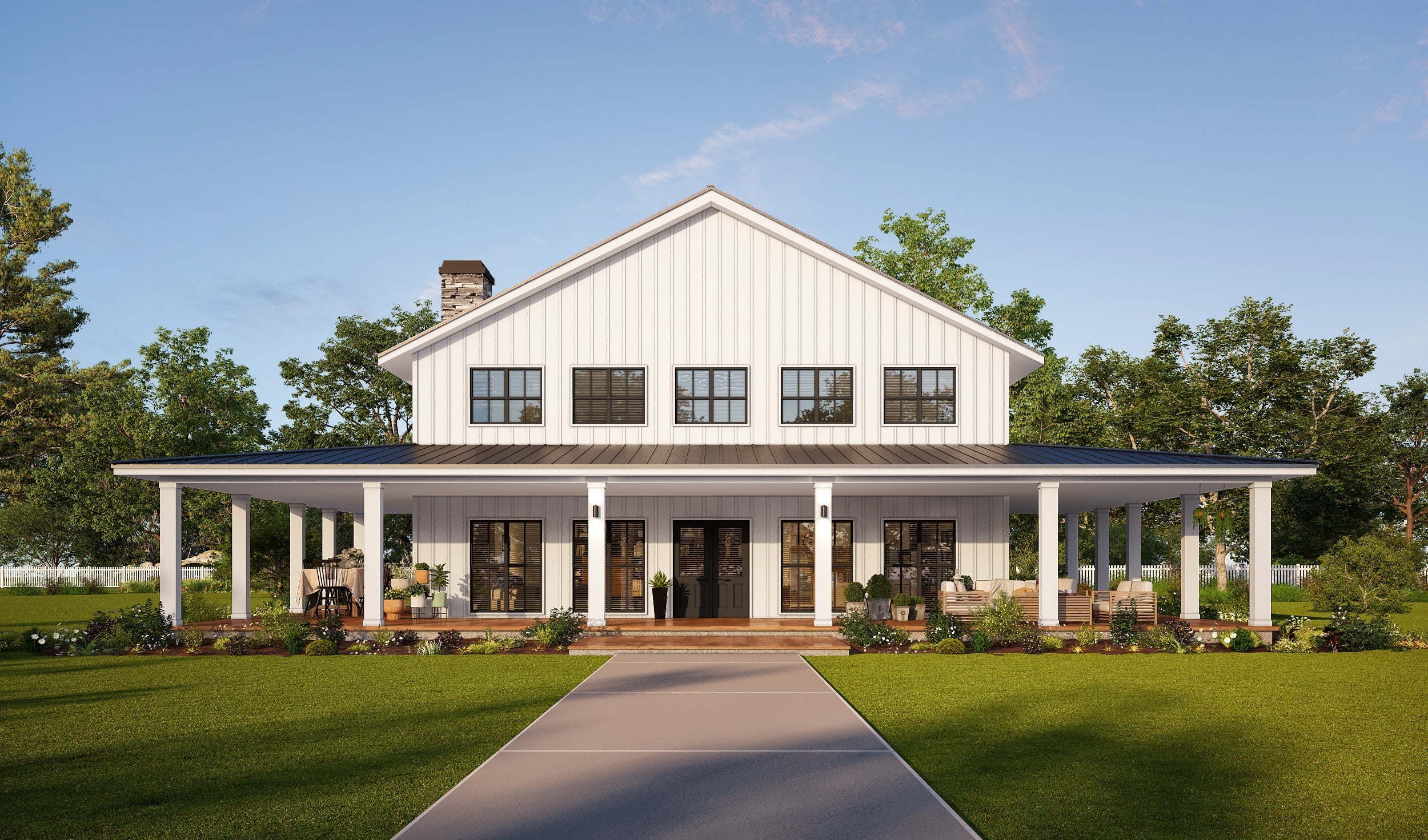
Barndominium Shell Cost vs. Finished Home Cost
One of the biggest mistakes people make when budgeting for a barndominium is confusing the shell cost with the finished home cost. A barndominium shell can sound very affordable at first, but the shell is only one part of the total project.
A shell may include the exterior structure, roof, siding, and sometimes windows and doors depending on the package. A finished barndominium includes everything required to actually live in the home: foundation, labor, insulation, HVAC, electrical, plumbing, drywall, flooring, cabinets, countertops, fixtures, appliances, permits, utilities, and interior finishes.
That difference matters because a low shell price does not mean the entire home will be inexpensive. If you are planning a barndominium build, you need to understand both numbers: what it costs to get the structure dried in and what it costs to complete the home.
At Barndominiums.com, we help homeowners start with professionally designed barndominium plans, explore barndominium kits, and connect with barndominium builders who can help price the full project more accurately.
What Is a Barndominium Shell?
A barndominium shell is the basic exterior structure of the building. It usually refers to the part of the home that gets the building framed, enclosed, and protected from the weather. The exact definition can vary depending on the builder, kit provider, or material supplier.
A barndominium shell may include:
- Primary framing materials
- Roof structure
- Roofing panels or roofing material
- Exterior wall framing
- Siding or exterior panels
- Trim components
- Fasteners
- Windows, depending on the package
- Exterior doors, depending on the package
- Garage doors, depending on the package
Some shell packages are very basic. Others are more complete and may include more exterior components. This is why you should never assume that two shell quotes include the same thing.
What Is a Dry-In Shell?
A dry-in shell usually means the building is framed, roofed, sided, and protected from rain and weather. A dry-in shell may include the roof, exterior walls, windows, exterior doors, and major shell components.
However, a dry-in shell is still not a finished home. It does not usually include the full interior build-out.
A dry-in shell may still need:
- Interior framing
- Insulation
- Electrical work
- Plumbing
- HVAC
- Drywall
- Interior doors
- Flooring
- Cabinets
- Countertops
- Bathrooms
- Kitchen finishes
- Lighting
- Appliances
- Trim and paint
The dry-in stage is a major milestone, but it is not the finish line.
What Is a Finished Barndominium?
A finished barndominium is a completed residential home. It is built to the point where the homeowner can move in and live in the home, assuming final inspections and occupancy requirements are met.
A finished barndominium usually includes:
- Foundation
- Shell or framing package
- Roofing and siding
- Windows and exterior doors
- Garage doors, if included
- Porches, if included
- Insulation
- Electrical system
- Plumbing system
- HVAC system
- Interior framing
- Drywall
- Flooring
- Cabinets
- Countertops
- Interior doors and trim
- Paint
- Lighting
- Plumbing fixtures
- Bathroom finishes
- Kitchen appliances
- Final inspections
This is the number most homeowners actually care about because it represents the real cost to build a livable home.
Why Shell Cost and Finished Cost Are So Different
The shell is only the outside structure. The finished home includes everything inside that structure, plus many items outside of it. That is why the finished cost is always much higher than the shell cost.
The shell does not usually include many of the most expensive parts of the home, such as:
- Foundation work
- Site preparation
- Septic or sewer
- Well or public water connection
- Electrical rough-in and finish work
- Plumbing rough-in and fixtures
- HVAC equipment and ductwork
- Spray foam or batt insulation
- Drywall installation and finishing
- Kitchen cabinets
- Countertops
- Flooring
- Bathrooms
- Interior trim
- Lighting
- Appliances
- Labor for the interior build-out
This is why a shell price can look attractive but still leave a large amount of work and cost remaining.
Barndominium Shell Cost: What You Are Really Paying For
When you pay for a barndominium shell, you are usually paying for the structure that creates the basic form of the building. This may include the framing system, roof, exterior walls, and sometimes the openings.
The shell is important because it determines the shape, strength, weather protection, and basic structure of the home. It also affects how easy or difficult the interior will be to finish.
Shell costs are influenced by:
- Total building size
- Wall height
- Roof pitch
- Roof complexity
- Steel frame, post-frame, or wood framing
- Window and door package
- Garage door openings
- Porches and covered areas
- Local wind and snow load requirements
- Material delivery distance
- Engineering requirements
If you are comparing shell or kit pricing, review the barndominium kits page to understand how a material package fits into the larger construction process.
Finished Home Cost: What You Still Need After the Shell
Once the shell is up, the home still needs to be turned into a finished living space. This is where many budgets rise quickly.
After the shell, the project may still need:
- Interior walls
- Insulation
- Electrical wiring
- Plumbing lines
- HVAC system
- Drywall
- Paint
- Flooring
- Kitchen cabinets
- Countertops
- Bathroom vanities
- Showers and tubs
- Toilets and sinks
- Interior doors
- Baseboards and trim
- Lighting fixtures
- Appliances
- Final utility connections
The interior finish-out can cost a major portion of the total project, especially if you choose custom cabinets, stone countertops, tile showers, premium flooring, large windows, upgraded lighting, or luxury appliances.

Shell Cost vs. Finished Cost Example
To understand the difference, imagine a simple 2,400 square foot barndominium. The shell price may cover the main structure, roof, siding, and exterior package. That number might sound like the majority of the project, but it is only one stage.
The finished home cost still needs to account for:
- Land and site work
- Foundation
- Utility connections
- Interior framing
- Mechanical systems
- Insulation
- Drywall
- Interior finishes
- Labor
- Permits and inspections
That is why a shell may represent only a portion of the final cost. The finished home number is usually the number that matters most for financing, move-in planning, and long-term budgeting.
What Is Included in a Barndominium Kit?
A barndominium kit is often closely related to the shell cost, but every kit is different. Some kits are basic material packages. Others are more complete shell packages designed around a specific plan.
A kit may include:
- Steel or framing components
- Roof panels
- Wall panels or siding
- Trim
- Fasteners
- Windows, depending on the package
- Exterior doors, depending on the package
- Garage doors, depending on the package
- Shell engineering details
A kit usually does not include everything required to finish the home. Before comparing kit prices, ask for a clear list of inclusions and exclusions.
What Is Usually Not Included in a Shell or Kit?
This is where many homeowners get surprised. A shell or kit may leave out many important costs.
Items often not included in a shell or kit include:
- Land
- Survey
- Site clearing
- Driveway
- Excavation and grading
- Foundation
- Concrete slab
- Septic system
- Well or water connection
- Power connection
- Permits
- Engineering beyond the shell
- Builder labor
- Interior framing
- Insulation
- Electrical
- Plumbing
- HVAC
- Drywall
- Cabinets
- Countertops
- Flooring
- Fixtures
- Appliances
- Final inspections
Before you commit to a shell package, make sure you understand what is still missing from the total project budget.
Why a Low Shell Price Can Be Misleading
A low shell price can make a barndominium feel much cheaper than it really is. The problem is not the shell price itself. The problem is assuming that the shell price is close to the finished home price.
A shell price can be misleading if it does not include:
- Labor to erect the shell
- Foundation work
- Windows and doors
- Garage doors
- Porches
- Interior systems
- Finish-out costs
- Utility connections
- Permits and inspections
If one quote looks dramatically cheaper than another, compare the scope carefully. The cheaper quote may simply include less.
Shell Cost vs. Finished Cost and Financing
Lenders usually care about the finished home cost, not just the shell. If you are applying for a construction loan, the lender wants to know the total cost to complete the home and the expected value after completion.
A lender may want to see:
- Professional house plans
- Builder contract
- Complete construction budget
- Land information
- Shell or kit quote
- Interior finish budget
- Permit information
- Insurance information
- Construction timeline
- Appraisal
If you only have a shell price, the lender may not have enough information to approve the full project. For more help preparing for financing, read Barndominium Construction Loans: What Lenders Want to See.
Shell Cost vs. Finished Cost by Square Foot
Many people ask how much a barndominium costs per square foot, but square-foot pricing depends heavily on what is included. Shell cost per square foot and finished cost per square foot are not the same.
A shell-only number may sound low because it excludes many major costs. A finished cost per square foot is higher because it includes the home as a livable residence.
When comparing square-foot costs, ask:
- Is this shell cost or finished cost?
- Does it include the foundation?
- Does it include labor?
- Does it include windows and doors?
- Does it include insulation?
- Does it include plumbing, electrical, and HVAC?
- Does it include interior finishes?
- Does it include permits?
- Does it include site work?
A square-foot number is only useful when you know exactly what it includes.
Finished Living Space vs. Garage or Shop Space
Another reason barndominium pricing gets confusing is that not every square foot is finished the same way. Finished living space usually costs more than garage or shop space.
Finished living space usually includes:
- Insulation
- HVAC
- Electrical
- Plumbing
- Drywall
- Flooring
- Interior finishes
- Kitchen and bathroom finishes
Garage or shop space may cost less per square foot, but it still requires concrete, framing, roofing, siding, doors, lighting, electrical, and sometimes insulation or HVAC.
A 2,000 square foot home with a 1,500 square foot shop should not be priced the same as a 3,500 square foot fully finished home. The living area and shop area should be budgeted separately.

How to Compare Shell Quotes the Right Way
If you are comparing shell quotes, do not just compare the final price. Compare what each quote includes.
Ask each provider:
- What framing system is included?
- Are windows included?
- Are exterior doors included?
- Are garage doors included?
- Are porches included?
- Is trim included?
- Are fasteners included?
- Is delivery included?
- Is engineering included?
- Is labor included?
- Is the foundation included?
- What is specifically excluded?
The best quote is not always the lowest quote. The best quote is the one that gives you the clearest scope and fits the plan you actually want to build.
How to Estimate the Finished Home Cost
To estimate the finished home cost, start with a realistic plan and build the budget in categories. Do not begin with a shell number and hope the rest will work itself out.
A complete budget should include:
- Land
- Survey
- Soil testing, if needed
- Site clearing
- Driveway
- Grading and drainage
- Foundation
- Shell or kit package
- Shell erection labor
- Roofing and siding
- Windows and exterior doors
- Porches and garages
- Insulation
- Electrical
- Plumbing
- HVAC
- Drywall
- Interior finishes
- Permits and inspections
- Builder overhead and labor
- Contingency fund
For a deeper budgeting breakdown, read How to Budget for a Barndominium Without Getting Surprised.
Why the Floor Plan Controls Both Costs
Your floor plan affects both shell cost and finished cost. A simple, rectangular plan is usually more cost-efficient than a complicated design with multiple rooflines, lots of corners, oversized porches, and unusual structural spans.
Your plan affects:
- Building dimensions
- Roofline complexity
- Wall height
- Window and door quantity
- Garage openings
- Porch size
- Interior layout
- Plumbing locations
- Foundation requirements
- Framing system
This is why it is smart to start with real plans before pricing a shell or kit. Browse the barndominium plans collection to compare layouts, sizes, bedrooms, garages, and shop options before getting quotes.
Can You Finish a Barndominium Shell Yourself?
Some homeowners consider buying a shell and finishing the interior themselves. This may be possible in some situations, but it is not always simple.
Finishing a shell yourself may require knowledge of:
- Framing
- Insulation
- Electrical coordination
- Plumbing coordination
- HVAC planning
- Drywall
- Flooring
- Cabinet installation
- Permits and inspections
- Local building codes
Even if you plan to do some work yourself, many jurisdictions still require licensed trades for electrical, plumbing, HVAC, and other systems. Lenders may also be cautious about owner-builder projects.
When a Shell-First Approach Makes Sense
A shell-first approach can make sense if you want to phase the project, manage some of the work yourself, or complete the interior over time. It may also work for buyers who already have land, utilities, a builder, and a clear finish-out plan.
A shell-first approach may make sense if:
- You understand what is included and excluded
- You have a clear finish-out budget
- You have qualified trades lined up
- You are not relying on vague estimates
- Your lender allows the project structure
- Your local building department approves the approach
The key is planning. A shell-first approach can work, but only if you know exactly how the home will be completed.
When a Finished Home Approach Makes More Sense
A finished home approach usually makes more sense if you want a clear move-in path, need construction financing, or do not want to manage multiple stages yourself.
A finished home approach may be better if:
- You want a complete residential home
- You are using a construction loan
- You need a builder to manage the project
- You want a clear schedule
- You want fewer surprises
- You need the home completed for occupancy
For most homeowners, budgeting for the finished home from the beginning is the safest way to avoid running out of money halfway through the build.
Common Mistakes When Comparing Shell and Finished Costs
Mistake 1: Assuming the Shell Price Is the Total Price
This is the most common mistake. A shell is only part of the home. The interior finish-out, foundation, labor, utilities, permits, and site work can add substantial cost.
Mistake 2: Comparing Quotes Without Comparing Inclusions
Two shell quotes may look similar but include very different materials, engineering, delivery, windows, doors, or labor.
Mistake 3: Forgetting Site Work
Land clearing, grading, driveway access, drainage, septic, well, and utility connections can all add major costs outside the shell.
Mistake 4: Underestimating Interior Finishes
Kitchens, bathrooms, flooring, cabinets, countertops, lighting, fixtures, and appliances can dramatically change the final price.
Mistake 5: Not Talking to a Builder Early
A local builder can help you understand what the shell quote does not include and what it will actually cost to finish the home in your area.
Barndominium Shell vs. Finished Home: Which Number Should You Use?
Use the shell cost when comparing material packages, framing systems, or early-stage construction options. Use the finished home cost when making serious budget, financing, and move-in decisions.
The shell cost helps you understand one part of the build. The finished home cost tells you what the project will actually take.
If you are applying for financing, buying land, choosing a builder, or deciding whether you can afford the home, focus on the finished cost.
Final Thoughts: Price the Whole Home, Not Just the Shell
A barndominium shell is an important part of the building process, but it is not the same as a completed home. The shell gets the structure started. The finished home is what you actually live in.
Before you commit to a shell, kit, or plan, make sure you understand what is included, what is excluded, and what still needs to be priced locally. A low shell price can be useful, but only if you know the full cost to complete the home.
The best way to avoid budget surprises is to start with a real floor plan, compare kit or shell quotes carefully, talk with local builders, price the interior finish-out, and build a full project budget from land to move-in.

FAQ: Barndominium Shell Cost vs. Finished Home Cost
What is a barndominium shell?
A barndominium shell is the basic exterior structure of the home. It may include framing, roofing, siding, trim, and sometimes windows and exterior doors depending on the package.
Is a barndominium shell the same as a finished home?
No. A shell is not a finished home. A finished barndominium includes foundation, utilities, labor, insulation, plumbing, electrical, HVAC, drywall, flooring, cabinets, fixtures, appliances, permits, and interior finishes.
Why is the finished cost so much higher than the shell cost?
The finished cost is higher because it includes everything required to make the home livable. The shell usually only covers the exterior structure and does not include many major construction and finish items.
Does a barndominium kit include the foundation?
Many kits do not include the foundation. Foundation work is usually priced separately based on soil, site conditions, local code, slab design, basement needs, and engineering requirements.
Does a shell price include labor?
Sometimes, but not always. Some shell prices are material-only. Others may include erection labor. Always ask whether labor, delivery, equipment, and installation are included.
Can I buy a shell and finish the inside myself?
Possibly, but it depends on your skills, local code requirements, lender rules, permits, and whether licensed trades are required. Finishing a shell still requires careful planning and a realistic budget.
What should I ask before buying a barndominium shell?
Ask what is included, what is excluded, whether labor is included, whether windows and doors are included, whether engineering is included, whether delivery is included, and what additional costs are required to finish the home.
Do lenders use shell cost or finished cost?
Lenders usually care about the full finished cost of the home, not just the shell. They want to know the total project budget, builder contract, appraisal value, plans, permits, and completion timeline.
Does shop space cost the same as finished living space?
Usually, no. Finished living space typically costs more because it includes HVAC, plumbing, drywall, flooring, kitchens, bathrooms, and interior finishes. Shop space may cost less but still requires concrete, framing, roofing, siding, doors, and electrical work.
How do I avoid being surprised by the finished cost?
Start with a real plan, compare shell quotes carefully, talk with local builders, price the foundation and utilities, estimate the interior finish-out, include permits and engineering, and add a contingency fund.
Browse Plans, Kits, and Builders
Ready to understand the difference between shell pricing and finished home pricing? Start with real plans, then compare kits and local builder input.
Browse Barndominium Plans
Explore Barndominium Kits
Find Barndominium Builders Near You
Request Custom Plans or Modifications
Read the Barndominium Budget Guide


