

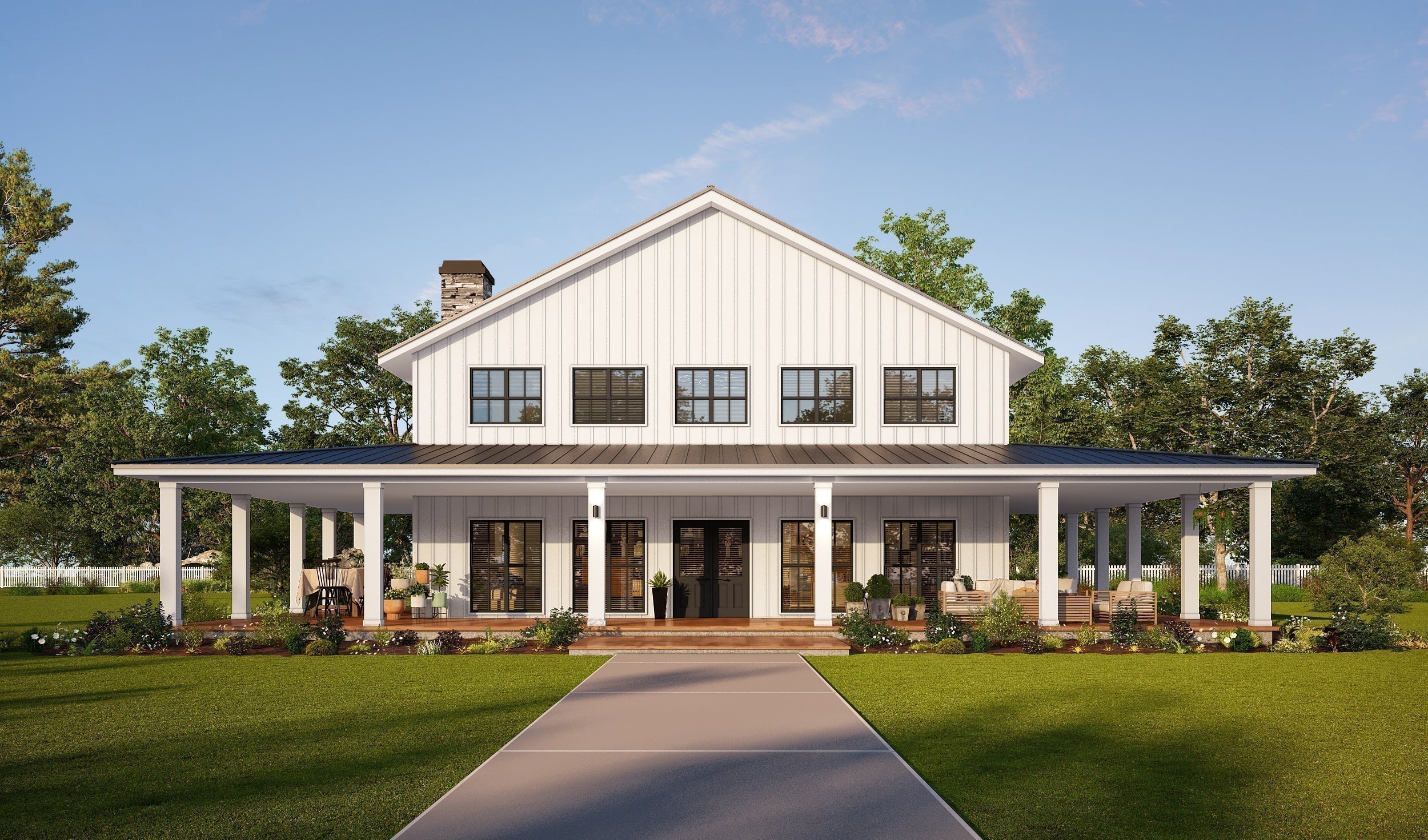
Single-Story Barndominium Plans: Why One-Level Living Is So Popular
Single-story barndominium plans are some of the most practical and popular layouts for families, retirees, rural landowners, and anyone who wants a home that is easy to live in every day. One-level living keeps the kitchen, great room, bedrooms, bathrooms, laundry room, pantry, mudroom, garage, and outdoor living areas on the same floor.
That simple design choice can make a huge difference. A single-story barndominium is easier to navigate, easier to clean, easier to maintain, and easier to enjoy long term. There are no stairs to climb, no second-floor bedrooms to manage, and no wasted upstairs space that only gets used occasionally.
Barndominiums are especially well suited for single-story layouts because they often use wide footprints, open spans, large great rooms, covered porches, and flexible garage or shop options. Whether you are building a forever home, downsizing for retirement, raising a family, or planning a rural acreage property, a one-level barndominium can be one of the smartest ways to build.
If you are still comparing layouts, browsing barndominium plans can help you see how different one-story designs handle bedrooms, bathrooms, garages, porches, shops, and open living space.
What Is a Single-Story Barndominium?
A single-story barndominium is a barndominium-style home where the main living spaces are located on one level. Instead of placing bedrooms, offices, lofts, or bonus rooms upstairs, the home is designed so everyday living happens on the first floor.
A single-story barndominium may include:
- Open kitchen, dining, and great room
- Private primary suite
- Secondary bedrooms on the same level
- Walk-in pantry
- Laundry room
- Mudroom or drop zone
- Home office or flex room
- Covered front or rear porch
- Attached garage
- Shop space
- RV garage
- Guest room or in-law suite
Some single-story barndominiums may still include an optional loft, bonus room, or storage area above the garage, but the main appeal is that everything needed for daily life stays on one level.
Why One-Level Living Is So Popular
One-level living has become popular because it works for almost every stage of life. Families appreciate having children’s bedrooms, laundry, kitchen, and living areas on the same floor. Retirees appreciate avoiding stairs. Rural homeowners appreciate how easily a single-story layout connects to porches, garages, shops, and outdoor spaces.
Single-story barndominium plans are popular because they offer:
- No stairs for daily living
- Easier long-term accessibility
- Better aging-in-place potential
- Simple traffic flow
- Open-concept living areas
- Easy access to porches and outdoor spaces
- Better connection to garages and shops
- Family-friendly bedroom placement
- Lower maintenance than complicated multi-level layouts
- Strong long-term usability
A single-story barndominium can feel open, efficient, and comfortable without needing a second floor to add function.
Single-Story Barndominiums Are Great for Families
Families often love single-story barndominiums because the layout makes everyday life easier. Parents can stay closer to children’s bedrooms. Laundry is easier to manage. The kitchen, great room, porch, garage, and mudroom can all connect naturally. There are no stairs to worry about with young children, pets, or older family members.
A family-friendly single-story barndominium may include:
- 3 or 4 bedrooms
- 2 or 3 bathrooms
- Large open kitchen
- Spacious great room
- Walk-in pantry
- Dedicated laundry room
- Mudroom near the garage or side entry
- Covered rear porch
- Home office or flex room
The best family layouts avoid wasted hallway space and keep the shared living areas comfortable. A good single-story plan should make daily routines easier, not more complicated.
Single-Story Barndominiums Are Great for Retirees
Retirees and empty nesters often prefer single-story barndominiums because they are easier to live in long term. A one-level layout avoids stairs, simplifies cleaning, improves accessibility, and gives homeowners more confidence that the home will still work years from now.
A retirement-friendly single-story barndominium may include:
- Private primary suite
- Guest bedroom
- Home office or hobby room
- Open living areas
- Walk-in shower
- Wide hallways
- Attached garage
- Covered porch
- Low-maintenance exterior materials
Even if you do not need accessibility features today, a single-story layout can make the home more comfortable and practical decades from now.
Single-Story vs. Two-Story Barndominiums
Both single-story and two-story barndominiums can work well, but they serve different needs. A two-story design can be useful on narrow lots or when you want a loft, upstairs bedrooms, or bonus space. However, single-story plans are usually more convenient for daily living.
Single-Story Barndominium Advantages
- No stairs
- Better accessibility
- Easier aging-in-place
- Simpler daily traffic flow
- Bedrooms, laundry, kitchen, and living areas on one level
- Better connection to porches, garages, and shops
- Great for families with young children
- Great for retirees and forever-home buyers
Two-Story Barndominium Advantages
- Can reduce the foundation footprint
- Works better on narrow lots
- Can include a loft or bonus room
- Can separate bedrooms by level
- May create a taller exterior profile
If your land can support the footprint and long-term convenience matters, a single-story barndominium is often the more practical choice.
How Much Does a Single-Story Barndominium Cost?
The cost to build a single-story barndominium depends on location, land, site work, foundation, building system, labor, finish level, porch size, garage space, shop space, utilities, permits, and local code requirements.
In many markets, finished barndominiums may fall somewhere around $150 to $300+ per square foot, depending on the project. A smaller single-story barndominium may cost less overall, while a large one-level barndominium with a garage, shop, wraparound porch, and high-end finishes can cost much more.
Major cost factors include:
- Land purchase
- Site clearing and grading
- Driveway installation
- Foundation type
- Steel frame, post-frame, or wood-frame construction
- Barndominium kit or shell package
- Roofline complexity
- Porch size
- Garage or shop space
- Window and door package
- Interior finish level
- HVAC, plumbing, and electrical systems
- Septic, well, or utility connections
- Permits and inspections
- Builder labor
The most important thing is to compare full project cost, not just kit or shell price. A shell package may help with the structure, but a finished home includes foundation, labor, utilities, insulation, mechanical systems, interior finishes, and final occupancy requirements.
Does a Single-Story Barndominium Cost More Than a Two-Story?
A single-story barndominium may require a larger foundation and roof area than a two-story home with the same finished square footage. That can increase certain costs. However, single-story layouts may also be simpler to frame, easier to access during construction, and easier to live in long term.
A two-story design may reduce the foundation size, but it can add costs for stairs, second-floor framing, additional structural support, railings, upper-level HVAC planning, and more complicated roof or wall details.
The best choice is not always about which layout is cheapest. The better question is which layout fits your land, lifestyle, budget, and long-term needs.
Best Sizes for Single-Story Barndominium Plans
Single-story barndominiums can work in many sizes. The right size depends on how many bedrooms you need, whether you want a garage or shop, how much storage you need, and how much outdoor living space matters.
1,200 Sq Ft Single-Story Barndominium
A 1,200 sq ft single-story barndominium can work well for starter homes, guest houses, vacation homes, retirees, and downsizers who want a compact, efficient layout. At this size, the plan needs to avoid wasted hallway space and focus on open living, smart storage, and practical bedrooms.
1,500 Sq Ft Single-Story Barndominium
A 1,500 sq ft one-level barndominium can often support 2 bedrooms, 2 bathrooms, a kitchen, living area, laundry space, and covered porch. This can be a strong size for couples, small families, retirees, and vacation homes.
2,000 Sq Ft Single-Story Barndominium
A 2,000 sq ft single-story barndominium is one of the most practical family sizes. It can support 3 bedrooms, 2 bathrooms, open living, pantry space, laundry, and a covered porch without feeling too large.
2,500 Sq Ft Single-Story Barndominium
A 2,500 sq ft single-story barndominium is a sweet spot for many families. It gives you room for 3 or 4 bedrooms, a larger kitchen, pantry, mudroom, laundry room, office, and better storage.
3,000 Sq Ft Single-Story Barndominium
A 3,000 sq ft one-level barndominium can work well for larger families, multi-generational living, guest suites, home offices, or homes with more storage and larger shared spaces.
Best Layout Ideas for Single-Story Barndominiums
1. Split-Bedroom Single-Story Barndominium
A split-bedroom layout places the primary suite on one side of the home and secondary bedrooms on the other. This is one of the best single-story layouts because it creates privacy without requiring a second floor.
A split-bedroom layout works well for:
- Families with children
- Couples who host guests
- Retirees with visiting family
- Homeowners who want more privacy
- Layouts with a central great room
2. Open-Concept Single-Story Barndominium
Open-concept living is one of the biggest advantages of a barndominium. A single-story plan can connect the kitchen, dining area, and great room into one large gathering space.
Open layouts work well with:
- Vaulted ceilings
- Large kitchen islands
- Walk-in pantries
- Fireplaces
- Covered rear porches
- Large windows
- Indoor-outdoor entertaining
3. Single-Story Barndominium with Garage
A one-level barndominium can include an attached garage, detached garage, side-entry garage, breezeway garage, or RV garage. The key is deciding whether the garage is included inside the main footprint or added separately.
Garage space is useful for:
- Vehicle parking
- Tool storage
- Outdoor equipment
- ATVs and side-by-sides
- Freezer or pantry overflow
- Hobby storage
Garage placement should be planned early because it affects driveway access, mudroom location, views, windows, and exterior curb appeal.
4. Single-Story Barndominium with Shop
Single-story barndominiums are a great fit for shop space because the living area and work area can be connected on the same level. A shop can be used for tools, equipment, vehicles, woodworking, mechanic work, farm storage, or small business use.
A shop layout should consider:
- Door height and width
- Ceiling height
- Tool storage
- Workbench space
- Electrical needs
- Vehicle access
- Noise separation from living space
5. Single-Story Barndominium with RV Garage
A single-story barndominium with an RV garage is ideal for homeowners who own a motorhome, camper, fifth wheel, boat, trailer, or oversized vehicle. The RV bay can be attached, detached, or connected by a breezeway.
Important RV garage planning details include:
- Garage door height
- Garage door width
- Bay depth
- Wall height
- Driveway turning radius
- Concrete slab design
- Electrical hookups
- Storage and workbench space
6. Single-Story Barndominium with In-Law Suite
A one-level layout can work well for multi-generational living because it keeps everyone on the same floor. An in-law suite, guest suite, or second primary suite can give family members privacy while still keeping the home connected.
An in-law suite may include:
- Private bedroom
- Private bathroom
- Walk-in closet
- Sitting area
- Separate porch access
- Nearby parking or garage access
Why Single-Story Barndominiums Work Well on Land
Many barndominiums are built on acreage, rural lots, farms, lake properties, wooded land, or family land. A single-story layout often works well because it spreads the home across the property and connects naturally to outdoor spaces.
A one-level barndominium can make it easier to:
- Face the best views
- Connect to a rear porch
- Add a garage or shop
- Create a side-entry mudroom
- Use wide open living areas
- Plan for future additions
- Avoid stairs on rural or retirement properties
Before choosing a plan, make sure the land can support the footprint. A wide single-story home needs enough room for setbacks, driveway access, utilities, septic, drainage, porches, and any garage or shop space.
Land Considerations for a Single-Story Barndominium
Single-story homes usually require a wider footprint than two-story homes with the same square footage. That means land planning is important.
Before finalizing a single-story plan, ask:
- Will the footprint fit inside the building envelope?
- Are there setback restrictions?
- Where will the driveway go?
- Will the garage doors face the right direction?
- Where will septic and well systems go?
- Does the porch face the best view?
- Will drainage move water away from the home?
- Is there room for a future shop or garage?
- Are there HOA or deed restrictions?
The plan should fit the land, not fight it. The best single-story barndominiums are designed around the property from the beginning.
Exterior Styles for Single-Story Barndominiums
Single-story barndominiums can work with many exterior styles. The right look depends on your land, budget, climate, and personal taste.
Popular exterior styles include:
- Modern farmhouse
- Black barndominium
- Rustic ranch
- Country farmhouse
- Modern metal-sided design
- Stone and wood accent design
- Wraparound porch design
If you like clean rooflines, covered porches, and a more residential look, browsing modern farmhouse plans can be a helpful place to compare styles that work well with single-story living.
Single-Story Barndominiums and Outdoor Living
One-level homes connect naturally to outdoor living areas. Instead of sending bedrooms and bonus rooms upstairs, the home can open directly to porches, patios, outdoor kitchens, firepits, gardens, yards, and scenic views.
Outdoor living features may include:
- Covered rear porch
- Wraparound porch
- Screened porch
- Outdoor kitchen
- Outdoor fireplace
- Patio dining area
- Hot tub or pool access
- Outdoor lounge space
For many homeowners, the porch is one of the most important parts of a single-story barndominium. It can make the home feel larger, more comfortable, and more connected to the land.
Common Mistakes with Single-Story Barndominium Plans
Mistake 1: Choosing a Plan That Is Too Wide for the Land
Single-story layouts can be wide. Make sure the full footprint, setbacks, driveway, septic, well, and garage placement all fit the property.
Mistake 2: Wasting Space on Hallways
One-level homes should have efficient traffic flow. Long hallways can waste square footage that could be used for storage, bedrooms, or living space.
Mistake 3: Ignoring Storage
A single-story layout needs smart storage. Plan closets, pantry space, laundry cabinets, mudroom storage, garage storage, and mechanical space early.
Mistake 4: Placing the Garage Poorly
Garage placement affects curb appeal, driveway access, mudroom function, noise, and views. It should be part of the design from the beginning.
Mistake 5: Not Thinking About Aging in Place
Even if you are young now, a single-story layout can be designed to work for decades. Wider hallways, walk-in showers, and low-step entries can make the home more flexible long term.
Mistake 6: Forgetting Outdoor Living
A single-story barndominium is a perfect opportunity for covered porches and indoor-outdoor living. Do not treat the porch as an afterthought.
Is a Single-Story Barndominium Right for You?
A single-story barndominium may be right for you if you want a home that is easy to live in, easy to maintain, and practical for long-term use.
This layout may be a good fit if:
- You want one-level living
- You dislike stairs
- You are planning a forever home
- You want an aging-in-place friendly layout
- You are building for retirement
- You have young children or pets
- You want easy porch access
- You need garage or shop access on the same level
- Your land can support a wider footprint
If your property has enough room and daily convenience matters, a single-story barndominium is often one of the best layouts you can choose.
Final Thoughts on Single-Story Barndominium Plans
Single-story barndominium plans are popular because they make daily life easier. They keep the kitchen, living room, bedrooms, bathrooms, laundry, pantry, mudroom, porch, garage, and shop access on one level.
That makes them practical for families, retirees, rural landowners, and anyone planning a long-term home. A one-level barndominium can be open, comfortable, accessible, and easy to maintain without wasting space on stairs or second-floor rooms that may not be used every day.
The best single-story plans start with the land. Make sure the footprint fits, the driveway works, the porch faces the right view, and the garage or shop connects naturally. Then choose a layout that supports how you want to live now and years from now.
FAQ: Single-Story Barndominium Plans
What is a single-story barndominium?
A single-story barndominium is a barndominium where the main living spaces are located on one level, including the kitchen, great room, bedrooms, bathrooms, laundry, pantry, mudroom, and often the garage or shop access.
Why are single-story barndominiums popular?
They are popular because they avoid stairs, improve daily convenience, work well for families and retirees, connect easily to porches and garages, and offer strong long-term accessibility.
Are single-story barndominiums good for retirees?
Yes. Single-story barndominiums are excellent for retirees because they provide one-level living, easier cleaning, fewer mobility concerns, and better aging-in-place potential.
Are single-story barndominiums good for families?
Yes. Families like one-level layouts because bedrooms, laundry, kitchen, living areas, garage access, and outdoor spaces can all stay connected on the same floor.
Does a single-story barndominium cost more than a two-story?
It can, because a one-story home may require more foundation and roof area for the same square footage. However, two-story homes can add costs for stairs, second-floor framing, railings, and HVAC complexity.
What is the best size for a single-story barndominium?
The best size depends on your needs. A 1,200 to 1,500 sq ft plan can work for smaller homes, while 2,000 to 3,000 sq ft plans are popular for families, guests, offices, and larger living areas.
Can a single-story barndominium have a garage?
Yes. A single-story barndominium can include an attached garage, detached garage, breezeway garage, side-entry garage, or RV garage depending on the layout and land.
Can a single-story barndominium have a shop?
Yes. One-level barndominiums work very well with shop space because the living area, mudroom, garage, and shop can all connect on the same level.
Do single-story barndominiums need more land?
Sometimes. A one-story layout usually has a wider footprint than a two-story home with the same square footage, so the land needs enough room for setbacks, driveway access, septic, well, porches, and garage placement.
Where should I start comparing single-story layouts?
Start by browsing barndominium plans so you can compare one-level layouts, square footage, bedrooms, garages, porches, and exterior styles before choosing a final design.
```


