

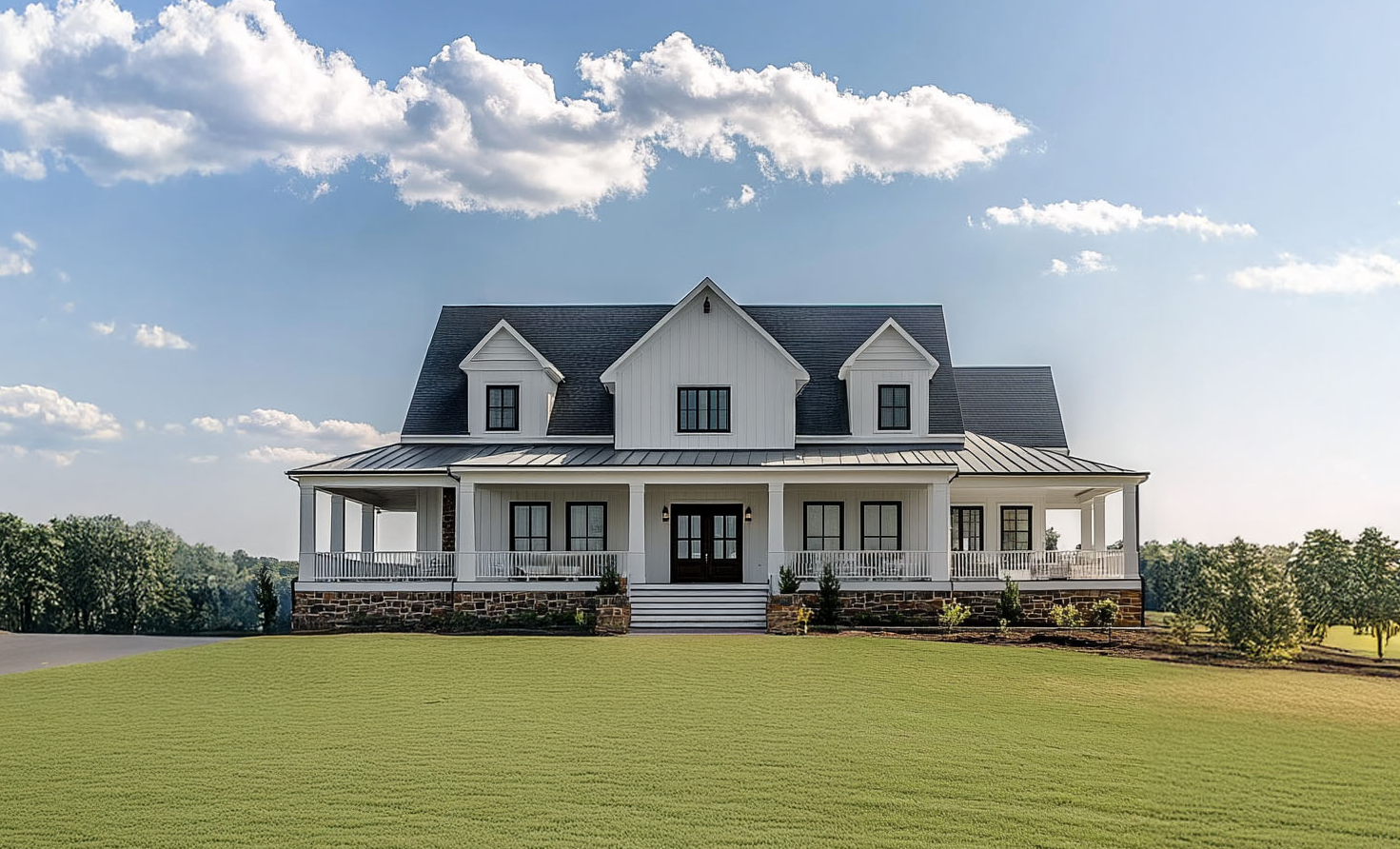
Can You Build a Barndominium on Any Land?
Can you build a barndominium on any land? No, not automatically. A barndominium can be built on many types of land, but not every property is ready or legal for residential construction. Before you buy land or choose a floor plan, you need to confirm zoning, deed restrictions, road access, utilities, septic, water, soil conditions, flood zones, setbacks, and local building requirements.
A piece of land may look perfect online, but that does not mean it is buildable. Some properties restrict metal-sided homes, detached shops, large garages, minimum square footage, driveway access, septic placement, or residential use. Other properties may allow a barndominium but require expensive grading, utility extensions, special engineering, or foundation changes.
The best land for a barndominium is not just affordable or scenic. It is land that can legally, practically, and affordably support the home you want to build.
If you are still comparing layouts, start with real residential plans before you buy land. Browsing barndominium plans can help you understand the footprint, bedroom count, garage needs, porch placement, and driveway space your property needs to support.
Can You Build a Barndominium Anywhere?
No, you cannot build a barndominium anywhere. You can only build one on land where local zoning, building codes, deed restrictions, access, utilities, and site conditions allow it.
A barndominium designed for full-time living is usually treated as a residential home. That means the property must allow residential construction and the home must meet local building code requirements.
Before assuming a property will work, verify:
- Residential zoning
- Local building code requirements
- HOA rules
- Deed restrictions
- Setback requirements
- Legal road access
- Driveway approval
- Power availability
- Water source
- Septic or sewer approval
- Flood zone status
- Soil and drainage conditions
- Whether metal-sided homes or barndominiums are allowed
If a property fails one of these checks, it may still be possible to build, but the project can become more expensive, slower, or harder to approve.
Why Some Land Will Not Work for a Barndominium
Some land is not suitable for a barndominium because it is not zoned for residential use, lacks legal access, cannot support septic, sits in a floodplain, has restrictive covenants, or requires too much site work.
Common reasons land may not work include:
- The property is not zoned for residential construction
- The subdivision does not allow metal-sided homes
- The HOA restricts barndominium-style homes
- The land has no legal road access
- The driveway location cannot be approved
- The lot is too small for setbacks
- The soil will not pass a perc test
- There is no affordable water source
- Power is too far away
- The land is in a flood zone or wetlands area
- The property has steep slopes or drainage problems
- The site development cost is higher than expected
This is why land should be evaluated before you buy it, not after. A cheap property can become expensive quickly if it needs major clearing, grading, utilities, septic work, engineering, or a special foundation design.
Start with Zoning
Zoning is one of the first things to check before buying land for a barndominium. Zoning controls how land can be used and what type of structure may be built on it.
Call the local planning or zoning office and ask:
- Is single-family residential construction allowed on this parcel?
- Are barndominium-style homes allowed?
- Are metal-sided homes allowed?
- Are there minimum square footage requirements?
- Are there exterior material restrictions?
- Are attached shops or garages allowed?
- Can a home and shop be under one roof?
- Are there height restrictions?
- What are the required setbacks?
- Are there special requirements for rural residential builds?
When calling, it often helps to describe the project as a custom residential home with barndominium-inspired design. Building departments usually care more about use, safety, code compliance, structure, and utilities than the nickname of the home.
Check Deed Restrictions and HOA Rules
Even if the county allows a barndominium, private restrictions can still prevent you from building one. Deed restrictions, subdivision covenants, and HOA rules may limit exterior materials, roof pitch, minimum square footage, garage placement, detached shops, livestock, fencing, or architectural style.
Review restrictions for:
- Minimum home size
- Metal siding limitations
- Roof material rules
- Exterior color restrictions
- Garage or shop restrictions
- Detached building rules
- Livestock restrictions
- Driveway requirements
- Architectural review requirements
- Construction timeline rules
Never assume “rural land” means “no restrictions.” Some rural subdivisions have strict design rules that can make barndominiums difficult or impossible to approve.
Legal Access Is Non-Negotiable
A property may look accessible on a map, but that does not always mean you have legal access. Legal access means you have the legal right to reach the property from a public road or recorded easement.
Before buying land, verify:
- Does the property have public road frontage?
- Is there a recorded easement?
- Who maintains the access road?
- Can construction vehicles reach the site?
- Can emergency vehicles access the home?
- Will a driveway permit be required?
- Will a culvert be needed?
Access problems can be expensive and difficult to fix. Do not buy land for a barndominium unless access is clear, legal, and practical for construction.
Utilities Can Make or Break the Budget
Utilities are one of the biggest land-related cost factors. A property with power, water, and sewer nearby may be much easier to build on than a remote parcel that needs long utility runs, a well, and a septic system.
Power
Contact the local utility company before buying land. Ask whether power is available and what it will cost to extend service to the building site.
- Is power available at the road?
- How far is the nearest power pole?
- Will service be overhead or underground?
- What does it cost to bring power to the home?
- How long does installation usually take?
Water
You also need to know whether the land has access to public water or will require a private well.
- Is public water available?
- What does a water tap cost?
- Will the property need a well?
- How deep are wells in the area?
- Is water quality a concern?
Septic or Sewer
If sewer is not available, the property will likely need a septic system. Septic approval can affect where the home can be placed and how many bedrooms the home can have.
- Is public sewer available?
- Will the property need septic?
- Has a perc test been completed?
- Where can the septic system go?
- Is there room for a replacement field?
- How many bedrooms can the septic system support?
If the property cannot support the bedroom count you want, you may need a different plan, a different septic design, or different land.
Does the Land Need to Pass a Perc Test?
If your property needs a septic system, a perc test may be required. A perc test evaluates whether the soil can absorb wastewater properly. If the land does not pass, you may need a more expensive septic system, a different building location, or you may not be able to build the home you want.
A failed or limited perc test can affect:
- Home location
- Bedroom count
- Septic system type
- Project cost
- Construction timeline
- Whether the land is buildable
Do not assume land is buildable until septic or sewer options are confirmed.
Setbacks and Building Envelopes Matter
Setbacks determine how far the home must be from property lines, roads, easements, waterways, septic systems, wells, and other structures. Even if a property is large, the actual buildable area may be smaller than you think.
Setbacks can affect:
- Home placement
- Garage orientation
- Shop location
- Porch placement
- Driveway layout
- Septic and well placement
- Future buildings
Before choosing a plan, confirm the building envelope. This is the actual area where the home can legally and practically be built.
Make Sure the Land Fits the Plan
Not every barndominium plan works on every property. A wide one-story plan may not fit a narrow lot. A barndominium with an RV garage may need a larger driveway and turning area. A plan with a rear porch should be oriented toward the best view. A home with a breezeway garage needs enough width to place both structures properly.
Before finalizing a plan, think about:
- Home footprint
- Driveway approach
- Garage door direction
- Porch views
- Sun exposure
- Drainage direction
- Septic location
- Well location
- Future shop or garage location
- Material delivery and staging area
If you are planning a larger family home, the land needs to support more than just square footage. Larger layouts may require more parking, a bigger septic system, wider driveway access, and better room for porches or garages. If you need extra bedrooms, compare 5-bedroom barndominium plans before buying land so you know the kind of footprint and septic capacity your property may need.
Soil, Slope, and Drainage Can Change the Build
Soil and slope affect the foundation, driveway, drainage, septic, excavation, and total project cost. A flat lot with good drainage is usually easier to build on than a steep or wet property.
Soil and slope can affect:
- Foundation design
- Concrete slab performance
- Basement feasibility
- Septic approval
- Driveway grade
- Excavation cost
- Retaining walls
- Drainage work
A sloped lot is not always bad. It can work well for a walkout basement, daylight basement, or view-focused design. But it needs to be evaluated early so the plan and budget reflect the real site conditions.
Flood Zones and Wetlands Can Limit Where You Build
Flood zones, wetlands, creeks, ponds, drainage easements, and low-lying areas can all affect a barndominium build. Some properties may require elevated construction, flood insurance, special permits, or environmental review.
Before buying land, check:
- Is the property in a flood zone?
- Are there wetlands on the property?
- Does water collect after heavy rain?
- Are there creeks, ponds, or drainage easements?
- Will the home need to be elevated?
- Will flood insurance be required?
- Are there restrictions on where you can build?
Water-related issues can be expensive, so they should be researched before you close on the property.
Can You Build a Barndominium on Agricultural Land?
Sometimes, but not always. Agricultural land may allow residential construction in some areas, while other areas may require rezoning, special permits, minimum acreage, or agricultural-use compliance.
Before buying agricultural land, ask:
- Is a single-family home allowed?
- Is a residential building permit available?
- Are there agricultural-use restrictions?
- Is there a minimum lot size?
- Can a home and shop be built on the same property?
- Are there access or utility limitations?
Agricultural land can be a great fit for barndominiums, especially for homesteads, farms, and rural living, but the rules need to be verified locally.
Can You Build a Barndominium in a Subdivision?
Sometimes, but subdivisions often have more restrictions. Even if zoning allows residential construction, the subdivision may have architectural rules, exterior material requirements, minimum square footage, roof pitch requirements, and garage restrictions.
Before buying a subdivision lot, review:
- HOA rules
- Architectural guidelines
- Minimum square footage
- Exterior material restrictions
- Garage and shop rules
- Detached building rules
- Roof pitch requirements
- Fence and driveway rules
If the subdivision does not allow metal siding or barn-style homes, you may need a more residential exterior or a different property.
Can You Build a Barndominium on a Small Lot?
Sometimes. A small lot may work if zoning allows residential construction, setbacks are reasonable, utilities are available, and the plan fits inside the buildable area.
Small lots can be challenging because there may be less room for:
- Wide one-story plans
- Side-entry garages
- Detached shops
- Large porches
- Septic systems
- Well separation requirements
- Future additions
- Driveway turnarounds
If the lot is small, a narrower plan, two-story design, front-entry garage, or simplified footprint may work better than a wide ranch-style barndominium.
Can You Build a Barndominium on Sloped Land?
Yes, but sloped land requires more planning. A slope can create opportunities for walkout basements, daylight lower levels, elevated porches, and better views, but it can also increase foundation, driveway, drainage, and excavation costs.
Sloped land may require:
- Additional grading
- Retaining walls
- Engineered foundation design
- Longer driveways
- Drainage improvements
- Basement or crawlspace planning
- More careful material delivery planning
Before buying sloped land, have a builder, engineer, or site professional evaluate the property. The view may be beautiful, but the site cost needs to make sense.
Can You Build a Barndominium in a Flood Zone?
Sometimes, but flood zones can make the process more complicated and expensive. You may need elevated construction, flood-resistant materials, special foundation design, flood insurance, and additional permits.
Flood zone issues can affect:
- Foundation height
- Home placement
- Insurance cost
- Driveway access
- Septic placement
- Permit approval
- Resale value
If the land is in a flood zone, research the requirements before buying. A low-priced property can become expensive quickly if the home must be elevated or specially engineered.
Can You Build a Barndominium Where There Is No Public Sewer?
Yes, many barndominiums are built on land without public sewer, but the property must be able to support a septic system. Septic approval is one of the biggest land checks for rural barndominium buyers.
Septic planning can affect:
- Home location
- Bedroom count
- Garage or shop placement
- Driveway route
- Future additions
- Replacement field location
If you want a larger home with more bedrooms, septic capacity becomes even more important. Do not finalize a 4-bedroom or 5-bedroom layout until you know what the septic system can support.
Can You Build a Barndominium Where There Is No Public Water?
Yes, but you may need a private well. Wells are common on rural land, but cost and water quality can vary widely.
Before buying land that needs a well, ask:
- How deep are nearby wells?
- What do wells typically cost in the area?
- Is water quality an issue?
- Are there known low-yield wells nearby?
- Are there local well permit requirements?
- Where can the well be placed in relation to septic?
Water access is not something to guess about. Confirm it before you commit to the property.
Can You Build a Barndominium Where Power Is Far Away?
Sometimes, but extending power can be expensive. Rural land that looks affordable can become much more costly if the nearest power source is far from the building site.
Ask the utility company:
- Where is the nearest service connection?
- What does it cost to extend power?
- Will the line be overhead or underground?
- Are easements needed?
- How long does installation take?
- Are there transformer or meter costs?
Power extension should be priced before buying land, especially if the property is remote.
How Much Land Do You Need for a Barndominium?
There is no single amount of land required for every barndominium. The land needed depends on the home footprint, setbacks, septic system, driveway, well, garage, shop, porches, and future expansion plans.
You may need more land if you want:
- A wide one-story home
- Large shop or garage
- RV garage
- Detached buildings
- Long driveway
- Septic and well systems
- Animals or fencing
- Future additions
- Privacy and outdoor living space
A small lot may work for a compact barndominium. Larger plans with shops, garages, breezeways, and 5-bedroom layouts usually need more room.
What Makes Land Good for a Barndominium?
Good barndominium land is land that can support the home legally, physically, and financially. The best property is not always the cheapest one. It is the one with the fewest surprises.
Good land usually has:
- Residential zoning
- Clear legal access
- Reasonable setbacks
- Usable building envelope
- Power nearby
- Water access or well potential
- Septic or sewer options
- Good drainage
- Buildable soil
- No major flood or wetland issues
- No restrictions against barndominiums or metal-sided homes
- Enough room for the plan, driveway, garage, and future needs
If the land checks most of these boxes, it may be a strong candidate for a barndominium.
Questions to Ask Before Buying Land for a Barndominium
Before buying land, ask the right questions. These questions can save you from expensive surprises later.
- Is residential construction allowed?
- Are barndominium-style homes allowed?
- Are metal-sided homes allowed?
- Are shops or large garages allowed?
- Are there HOA or deed restrictions?
- What are the setbacks?
- Is there legal road access?
- Will a driveway permit be required?
- Is power available?
- Is public water available?
- Will the property need a well?
- Is sewer available?
- Will the property need septic?
- Has the land passed a perc test?
- Is the property in a flood zone?
- Are there wetlands?
- Is the soil suitable for the foundation?
- Does the land fit the plan you want?
If you cannot answer these questions, you are not ready to buy the land yet.
Common Mistakes When Buying Land for a Barndominium
Mistake 1: Buying Land Before Checking Zoning
Affordable land is not always buildable land. Always confirm zoning and residential use before buying.
Mistake 2: Assuming Rural Land Has No Restrictions
Rural subdivisions can still have deed restrictions, architectural rules, or HOA requirements.
Mistake 3: Ignoring Septic Approval
If there is no public sewer, septic approval can control where the home goes and how many bedrooms you can build.
Mistake 4: Forgetting Utility Costs
Power, water, sewer, septic, well, and internet can add major costs to rural land.
Mistake 5: Choosing the Plan Before Understanding the Land
Your land affects the footprint, driveway, garage, porch views, septic, well, and foundation.
Mistake 6: Not Checking Flood Zones
Flood zones can affect foundation design, insurance, permits, and total project cost.
Mistake 7: Underestimating Site Work
Clearing, grading, drainage, driveway construction, excavation, and retaining walls can change the budget quickly.
Final Thoughts: Can You Build a Barndominium on Any Land?
You cannot build a barndominium on just any land. You need land that allows residential construction, supports the home footprint, has legal access, can handle utilities, meets septic or sewer requirements, and complies with zoning, deed restrictions, setbacks, and local building codes.
The right land can make a barndominium project smoother, more affordable, and easier to approve. The wrong land can create expensive delays, design changes, utility problems, septic issues, or permit problems.
Before buying land, do the research. Call the zoning office. Check deed restrictions. Confirm access. Price utilities. Research septic or sewer. Study the flood map. Understand setbacks. Make sure the plan fits the property.
A barndominium can be a great choice for rural land, acreage, homesteads, farms, family properties, and custom home sites. But the land has to work first.
FAQ: Can You Build a Barndominium on Any Land?
Can you build a barndominium on any land?
No. A barndominium can only be built on land where zoning, building codes, deed restrictions, access, utilities, septic or sewer, setbacks, and site conditions allow it.
What kind of land is best for a barndominium?
The best land is zoned for residential use, has legal access, reasonable setbacks, good drainage, utility access, water options, septic or sewer approval, and no restrictions against barndominiums or metal-sided homes.
Can you build a barndominium on agricultural land?
Sometimes. Agricultural land may allow a residence in some areas, but other locations may require special permits, rezoning, minimum acreage, or agricultural-use compliance.
Can you build a barndominium in a subdivision?
Sometimes, but subdivisions often have HOA rules, deed restrictions, exterior material requirements, minimum square footage rules, and architectural guidelines that can limit barndominiums.
Do you need a perc test for a barndominium?
If the property needs a septic system, a perc test may be required. A failed or limited perc test can affect home location, bedroom count, septic cost, and whether the property is buildable.
Can a barndominium be built on a small lot?
Yes, if zoning, setbacks, utilities, septic or sewer, and the plan footprint work. Small lots may require narrower plans or simpler layouts.
Can you build a barndominium in a flood zone?
Sometimes, but flood zones may require elevated construction, special permits, flood insurance, and additional foundation planning.
How much land do you need for a barndominium?
There is no single required acreage. The amount of land needed depends on the home footprint, setbacks, septic, well, driveway, garage, shop, porches, and future expansion plans.
Should I choose land or a plan first?
Ideally, you should research both together. The land affects what kind of plan will work, and the plan affects how much land, driveway space, septic capacity, and buildable area you need.
What should I check before buying land for a barndominium?
Check zoning, deed restrictions, HOA rules, legal access, setbacks, utilities, water, septic or sewer, perc test results, flood zones, wetlands, soil, drainage, driveway approval, and whether the plan fits the property.
```


