

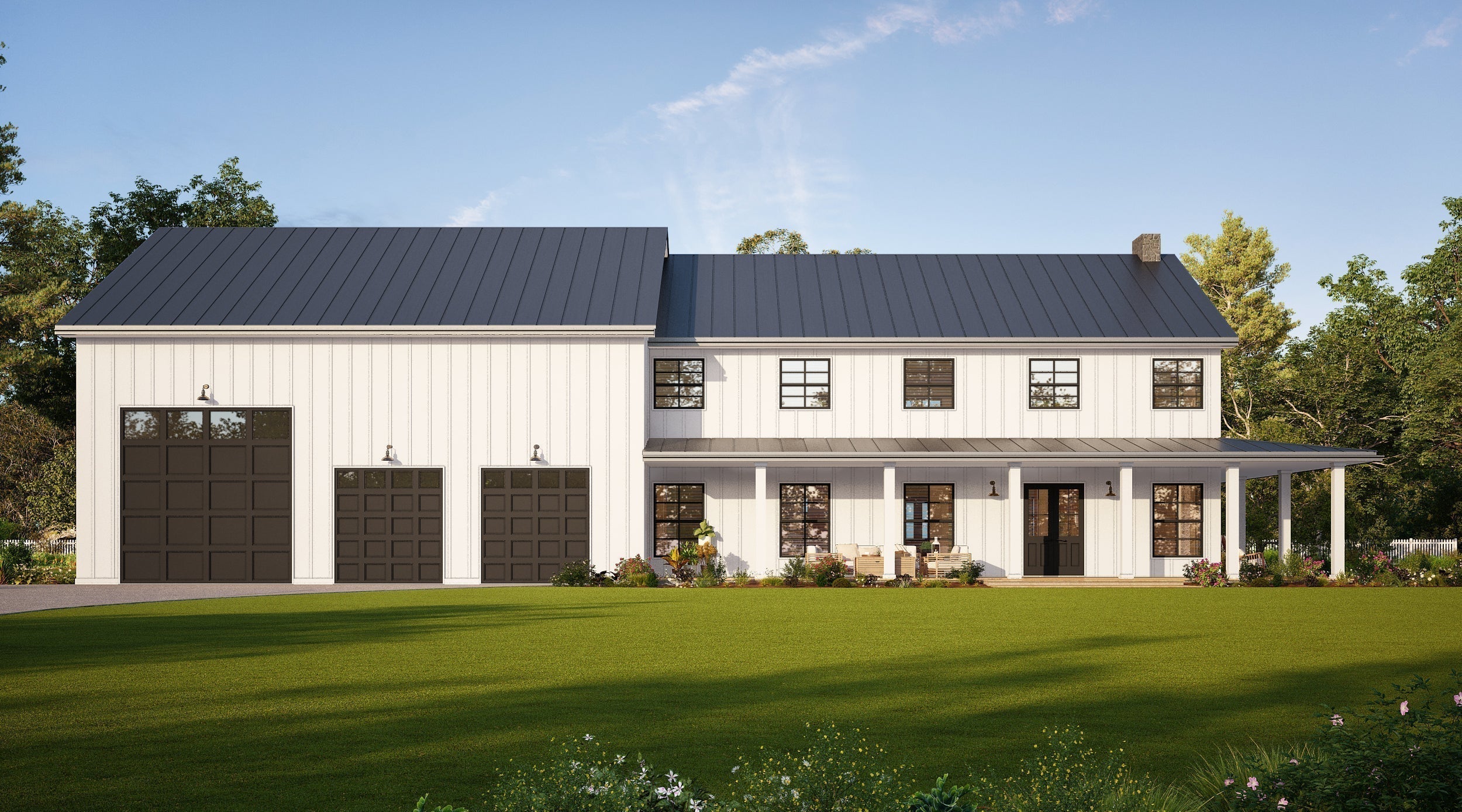
Building a Custom Barndominium: Plans, Costs & Builder Tips
Building a custom barndominium is one of the best ways to create a home that fits your land, lifestyle, budget, family size, storage needs, and long-term goals. Instead of forcing your family into a standard house plan, a custom barndominium gives you the freedom to design around the way you actually live.
For some homeowners, that means a single-story open-concept home with a large kitchen, vaulted great room, walk-in pantry, and covered porch. For others, it means a barndominium with a shop, RV garage, home office, in-law suite, hobby room, mudroom, or extra bedrooms for a growing family.
The freedom is exciting, but it also means you need a clear plan. A custom barndominium should not start with random screenshots, guesses, and rough ideas. It should start with land research, realistic budgeting, professional plans, builder input, and a strong understanding of what it takes to move from concept to construction.
If you are planning a larger custom home for a big family, multi-generational living, or extra guest space, browsing a focused collection like 5-bedroom barndominium plans can help you see how larger layouts organize bedrooms, bathrooms, open living areas, garages, storage, and porches.
What Is a Custom Barndominium?
A custom barndominium is a residential home designed around your specific needs instead of being limited to a pre-existing layout. It may be built with a steel frame, post-frame system, metal building package, conventional wood framing, or a hybrid building method depending on the plan, builder, engineering, and local requirements.
A custom barndominium can be designed around:
- Your land and driveway access
- Your preferred square footage
- Your family size
- Your bedroom and bathroom needs
- Your garage, shop, or RV bay requirements
- Your porch and outdoor living goals
- Your budget and finish level
- Your preferred exterior style
- Your long-term resale and lifestyle goals
Modern barndominiums are not just simple metal buildings with living space. They can be full custom homes with vaulted ceilings, luxury kitchens, large windows, private primary suites, custom showers, outdoor fireplaces, wraparound porches, and high-end finishes.
Why Build a Custom Barndominium?
The biggest reason to build a custom barndominium is control. You are not limited to someone else’s layout. You can design the home around the way your family lives, works, stores, entertains, and uses the land.
A custom barndominium may make sense if you want:
- A floor plan designed around your property
- A one-story forever home
- A large garage or shop
- An RV garage or oversized storage bay
- A home office or business workspace
- A multi-generational layout
- An in-law suite
- A large kitchen and pantry
- A mudroom for rural living
- A specific exterior style
- A plan that can be paired with a barndominium kit
If your vision is unique, a custom plan may be the smartest way to avoid expensive compromises later.
Custom Barndominium vs. Stock Barndominium Plan
Before you build custom, it helps to compare your options. You may not need a fully custom design if an existing plan already gets you most of the way there.
A stock barndominium plan is a pre-designed layout that is already available. It is usually faster and more affordable upfront. A custom barndominium plan is designed specifically for your land, lifestyle, and building goals.
Many homeowners choose a middle option: start with a stock plan and modify it. This can save time while still giving you a layout that better fits your property and family.
Stock plans may be best if:
- You find a layout that is already close
- You want to move faster
- You want a lower upfront plan cost
- Your land is simple to build on
- You do not need unusual garage or shop space
Custom plans may be best if:
- Your land is narrow, sloped, wooded, or unusual
- You need a specific shop or RV garage layout
- You want an in-law suite or multi-generational plan
- You need special accessibility features
- You have a very specific design vision
- No stock plan fits without major changes
If a stock plan is close, modifying it may be the better value. If nothing fits your land or goals, full custom design may be the smarter path.
Step 1: Start with Your Land
Your land affects almost every major decision in a custom barndominium build. Before finalizing a plan, you need to understand the property, driveway, utilities, septic, water, slope, drainage, setbacks, views, and local restrictions.
Before buying land or designing a custom plan, ask:
- Is residential construction allowed?
- Are barndominiums or metal-sided homes allowed?
- Are there HOA or deed restrictions?
- What are the setback requirements?
- Is there legal road access?
- Is power available?
- Will the property need a well?
- Will the property need septic?
- Is the land in a flood zone?
- Does the slope affect the foundation?
- Will the driveway work with the garage or shop?
- Where are the best views?
A custom plan should fit the land, not fight it. The best layouts place porches toward the best views, garage doors toward practical driveway access, and living areas where natural light makes the home feel better.
Step 2: Set a Realistic Budget
Custom barndominiums can be budget-friendly when designed efficiently, but custom does not automatically mean cheap. The final cost depends on size, land, foundation, building system, finish level, builder labor, porch size, garage space, shop space, and local code requirements.
In many markets, finished barndominiums may fall somewhere around $150 to $300+ per square foot, depending on the project. A simple custom barndominium with practical finishes may cost much less than a luxury design with large porches, oversized windows, custom cabinets, tile showers, stone fireplaces, RV garages, and a large shop.
Major cost factors include:
- Land purchase
- Site clearing and grading
- Driveway installation
- Foundation type
- Steel frame, post-frame, metal building, or wood framing
- Kit or shell package
- Roofing and siding
- Windows and exterior doors
- Porches and outdoor living areas
- Garage or shop space
- Interior finish level
- HVAC, plumbing, and electrical systems
- Septic, well, or utility connections
- Permits and inspections
- Builder labor and subcontractors
The best custom barndominium budget separates finished living space, garage space, shop space, porch space, land, site work, utilities, and interior finishes. If everything is lumped together, it becomes much harder to know where the money is actually going.
Step 3: Understand Shell Cost vs. Finished Home Cost
One of the biggest mistakes buyers make is confusing shell cost with finished home cost. A custom barndominium shell may include the exterior frame, roof, siding, and sometimes windows and doors. A finished home includes everything needed to actually live in the home.
A shell price may not include:
- Land
- Foundation
- Site work
- Builder labor
- Electrical
- Plumbing
- HVAC
- Insulation
- Drywall
- Flooring
- Cabinets
- Countertops
- Fixtures
- Appliances
- Septic or sewer
- Well or public water
- Permits and inspections
If you are comparing kit pricing, shell pricing, and builder pricing, make sure every quote is talking about the same scope. A low shell number may look attractive, but it is not the same thing as a move-in-ready custom home.
Step 4: Choose the Right Size
Custom design gives you the freedom to choose the right size instead of settling for a layout that is too small or too large. The goal is to build enough space for comfort without paying for square footage you will not use.
Popular custom barndominium sizes include:
- Small barndominiums: great for cabins, guest houses, retirees, and starter homes
- 2,000 sq ft barndominiums: practical for 3-bedroom layouts and efficient family homes
- 2,500 sq ft barndominiums: a strong sweet spot for families
- 3,000 sq ft barndominiums: great for larger families, offices, guest rooms, and bigger porches
- 50x60 barndominiums: great for larger family layouts with 3,000 sq ft under roof
- 60x80 barndominiums: ideal for large homes, shops, garages, or multi-use layouts
If you are planning a large custom home with extra bedrooms, a guest wing, or space for a growing family, compare 5-bedroom barndominium plans to see how larger layouts handle bedroom separation, bathrooms, storage, and open living space.
Step 5: Decide on the Layout
The layout is where a custom barndominium becomes personal. This is where you decide how the home should function every day.
Common custom layout goals include:
- Open-concept kitchen, dining, and living areas
- Vaulted great room
- Split-bedroom layout
- Private primary suite
- Walk-in pantry
- Large laundry room
- Mudroom or drop zone
- Home office
- Guest suite or in-law suite
- Covered rear porch
- Garage, shop, or RV bay access
The best layouts avoid wasted space. Long hallways, oversized bedrooms, awkward traffic flow, and poorly placed doors can make even a large home feel inefficient.
Step 6: Plan the Kitchen, Pantry, and Great Room
The kitchen and great room are usually the heart of a custom barndominium. These spaces should feel open, bright, and connected.
Popular design features include:
- Large kitchen island
- Walk-in pantry
- Open dining area
- Vaulted great room
- Fireplace or focal wall
- Large windows
- Glass doors to the porch
- Easy flow to the mudroom and garage
A custom plan allows you to decide whether the kitchen faces the view, whether the dining area connects to the porch, and how the great room should feel when you walk through the front door.
Step 7: Decide Whether You Need a Garage, Shop, or RV Bay
One of the biggest advantages of building a custom barndominium is the ability to design around garage, shop, and storage needs from the beginning.
Your custom barndominium can include:
- Attached garage
- Detached garage
- Breezeway garage
- Workshop
- RV garage
- Boat storage
- Farm equipment storage
- Tool room
- Home business workspace
- Hobby shop
Garage and shop space should be planned carefully because it affects the slab, driveway, roofline, wall height, garage doors, electrical needs, and appraisal. Decide early whether your garage or shop is personal storage, hobby space, business space, or vehicle storage.
Step 8: Think About One-Level Living
Many custom barndominium buyers choose single-story layouts because they are practical, accessible, and easy to live in long term. One-level living keeps bedrooms, bathrooms, kitchen, laundry, and main living areas on the same floor.
A single-story custom barndominium works well for:
- Families with children
- Retirees
- Multi-generational households
- Rural landowners
- Homeowners planning a forever home
One-level living is especially helpful when you are designing for long-term comfort. Even if you do not need accessibility features today, a single-story layout can make the home easier to live in years from now.
Step 9: Choose a Building System
Barndominiums can be built several different ways. The best building system depends on your plan, budget, builder, location, engineering needs, and personal preferences.
Common building systems include:
- Steel frame barndominiums
- Post-frame barndominiums
- Metal building systems
- Conventional wood-frame barndominiums
- Hybrid framing systems
Steel frame barndominiums are popular because they can offer strength, durability, dimensional stability, resistance to pests, and strong long-term performance. Post-frame and wood-frame methods may also work depending on the project, builder, and local market.
The right system is not just about what looks good online. It should match your local codes, climate, builder experience, engineering requirements, insulation strategy, and budget.
Step 10: Decide Whether a Barndominium Kit Makes Sense
A custom barndominium can often be paired with a kit or organized material package depending on the plan, engineering, builder, and local requirements. A kit may help organize the shell portion of the build by packaging materials such as framing, roofing, siding, trim, fasteners, and sometimes windows and doors.
A barndominium kit may help with:
- Material organization
- Shell planning
- Faster framing coordination
- More predictable material packages
- Steel frame or metal building options
A kit usually does not include:
- Land
- Foundation
- Site work
- Builder labor unless specified
- Utilities
- Permits
- Interior finish-out
- Electrical, plumbing, and HVAC
- Drywall, flooring, cabinets, and fixtures
If you are considering a kit, make sure your quote is based on your actual custom plan, not a generic shell size that does not reflect your final layout.
Step 11: Find the Right Builder
A custom barndominium is only as good as the team building it. The right builder should understand residential construction, local codes, foundation requirements, permits, utilities, and the building system you want to use.
Ask builders:
- Have you built barndominiums before?
- Have you worked with steel kits or metal building systems?
- Can you build from my custom plan?
- Do you offer turnkey construction?
- What is included in your quote?
- What is excluded?
- Do you handle permits?
- Do you coordinate site work and utilities?
- How do you handle change orders?
- Can you provide references?
A good builder can help catch cost issues before construction starts. A bad builder can turn even a good plan into an expensive problem.
Step 12: Prepare for Financing
Financing a custom barndominium is possible, but the project needs to be documented clearly. Lenders want to understand the plan, land, budget, builder, construction timeline, appraisal, insurance, and finished value.
Before talking to lenders, gather:
- Custom floor plan
- Construction budget
- Builder contract or estimate
- Kit quote, if using a kit
- Land information
- Survey or site plan
- Utility information
- Permit research
- Insurance information
- Personal financial documents
The clearer your plan and budget are, the easier it is for lenders, appraisers, builders, and insurance agents to understand the project.
Step 13: Get Permits and Local Approvals
A custom barndominium must meet local residential building requirements. Before construction starts, confirm what your local building department requires.
Permit requirements may include:
- Residential building permit
- Foundation approval
- Electrical permit
- Plumbing permit
- Mechanical permit
- Septic approval
- Driveway permit
- Energy code documentation
- Engineered drawings
- Final inspection or certificate of occupancy
It can help to describe the home as a custom residential home with barndominium-inspired design. Local officials usually care more about code compliance, zoning, structural design, and safety than the nickname of the home.
Step 14: Avoid Common Custom Barndominium Mistakes
Mistake 1: Designing Before Understanding the Land
The land affects the entire project. Do not finalize a custom plan before understanding access, slope, utilities, septic, drainage, setbacks, and views.
Mistake 2: Confusing Kit Cost with Finished Cost
A kit or shell is not the full home. Always budget for foundation, labor, utilities, permits, and interior finishes.
Mistake 3: Trying to Include Everything
Custom design gives you freedom, but too many features can push the home over budget. Prioritize what matters most.
Mistake 4: Waiting Too Long to Talk to a Builder
A builder can help identify cost issues early. Waiting until the plan is finished may lead to expensive changes.
Mistake 5: Ignoring Storage
Storage is critical in a custom home. Plan closets, pantry space, laundry storage, mudroom storage, garage storage, and shop storage early.
Mistake 6: Making Major Changes During Construction
Changes are much cheaper on paper than they are after construction begins. Finalize as many decisions as possible before building starts.
Custom Barndominium Design Ideas
If you are designing from scratch, focus on features that add long-term function and value. The best custom features are the ones you will use every day.
Popular custom barndominium design ideas include:
- Vaulted great room
- Large kitchen island
- Hidden walk-in pantry
- Oversized laundry room
- Mudroom with lockers
- Split-bedroom layout
- Private primary suite
- Freestanding tub
- Walk-in tile shower
- Home office
- In-law suite
- Outdoor fireplace
- Wraparound porch
- Attached shop
- RV garage
Build around lifestyle first, then style. A beautiful home that does not function well will become frustrating quickly.
Custom Barndominiums for Large Families
One of the biggest advantages of custom design is the ability to create a layout for larger families. Standard plans may not always provide enough bedrooms, bathrooms, storage, or gathering space. A custom barndominium can solve that by building around the way a large household actually lives.
A large-family custom barndominium may include:
- 4 or 5 bedrooms
- 3 or more bathrooms
- Large kitchen and dining space
- Oversized pantry
- Large laundry room
- Separate kids’ bedroom wing
- Guest suite or in-law suite
- Home office or homework room
- Garage and storage space
- Covered porch for outdoor living
If you are planning for a larger family or need extra bedrooms for guests, compare 5-bedroom barndominium plans before deciding whether full custom design is necessary. A stock layout may already be close, or it may give you a strong starting point for modifications.
Is Building a Custom Barndominium Right for You?
Building custom may be the right choice if you want a home designed specifically around your land, family, storage needs, and long-term goals.
A custom barndominium may be a good fit if:
- You are building a forever home
- You have unique land
- You want a specific garage or shop layout
- You need an in-law suite or guest wing
- You want one-level living
- You need an RV garage
- You want a specific exterior style
- You cannot find a stock plan that fits
- You want full control over the layout
If you find a stock plan that is close, modifying it may be the better value. If nothing fits your land or goals, full custom design may be the smarter path.
Final Thoughts on Building a Custom Barndominium
Building a custom barndominium gives you the chance to create a home that fits your land, lifestyle, family, budget, and future. It allows you to design around open living, storage, shops, garages, porches, views, and everyday comfort.
The best custom barndominiums do not happen by accident. They start with land research, realistic budgeting, professional plans, builder input, and clear priorities. Before you build, understand the difference between shell cost and finished cost, decide whether a kit makes sense, talk to lenders, verify local requirements, and choose the right builder.
Start with a real plan. Build around your land. Prioritize what matters. Then create a custom barndominium that works for the way you actually live.
FAQ: Building a Custom Barndominium
What is a custom barndominium?
A custom barndominium is a residential home designed around your specific land, lifestyle, family size, budget, garage needs, shop needs, and long-term goals instead of being limited to a pre-designed layout.
Is building a custom barndominium more expensive?
It can be more expensive than buying a stock plan because custom design requires more planning and design work. However, it can also prevent expensive compromises if your land, layout needs, garage, shop, or family requirements are unique.
Should I use a stock plan or custom plan?
Use a stock plan if you find one that is already close to what you need. Choose custom design if your land is unusual, your layout needs are specific, or no existing plan fits without major changes.
How much does it cost to build a custom barndominium?
Costs vary by location, land, foundation, size, building system, builder labor, garage space, shop space, porch size, finish level, utilities, and permits. Many finished barndominiums may fall somewhere around $150 to $300+ per square foot depending on the project.
Can a custom barndominium have 5 bedrooms?
Yes. A custom barndominium can be designed with 5 bedrooms, multiple bathrooms, a large kitchen, guest suite, office, garage, shop, mudroom, and covered porch if the square footage and budget support it.
Where should I start if I need a large family layout?
A good starting point is browsing 5-bedroom barndominium plans to see how larger layouts organize bedrooms, bathrooms, storage, open living areas, and garage access.
Can a custom barndominium include a shop?
Yes. One of the main advantages of custom design is the ability to plan garage, shop, RV bay, storage, or hobby space from the beginning.
Can a custom barndominium be built with a kit?
Yes, many custom barndominiums can be paired with a kit or material package depending on the plan, engineering, builder, and local requirements.
What is the biggest mistake when building a custom barndominium?
The biggest mistake is designing the home before understanding the land, budget, builder requirements, utilities, permits, and finished cost. A custom plan should be based on real project conditions.
Do I need permits for a custom barndominium?
Yes, in most areas a custom barndominium being built as a residence will need building permits, inspections, and local code approval.
```


