

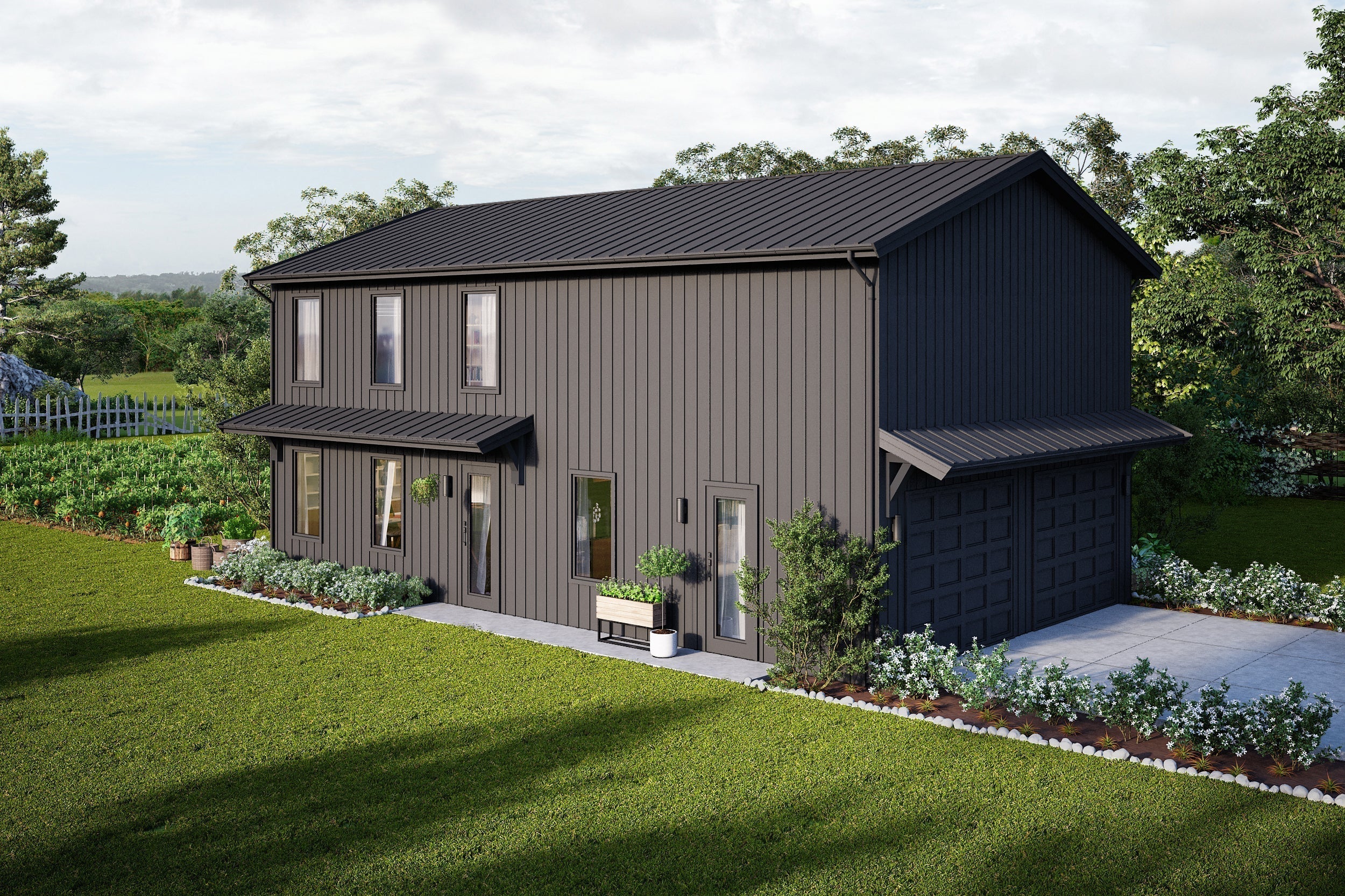
Do You Need a Permit to Build a Barndominium?
Do you need a permit to build a barndominium? In most cases, yes. If you are building a barndominium as a full-time residence, you should expect to need permits, inspections, approved plans, and local building department review before construction begins.
A barndominium may have a barn-inspired exterior, metal siding, steel framing, post-frame construction, or a large shop attached, but once it is designed for residential living, it is usually treated like a custom home. That means the home may need to meet zoning rules, residential building codes, energy code requirements, foundation requirements, septic or sewer rules, electrical code, plumbing code, mechanical code, and final inspection standards.
The exact permits you need depend on your state, county, city, land, building method, utilities, foundation, and whether the home includes a garage, shop, RV bay, basement, or detached structure. Some rural areas have a simpler process, while cities, suburbs, coastal areas, mountain regions, and HOA communities may have more requirements.
At Barndominiums.com, we help homeowners browse professionally designed barndominium plans, explore compatible barndominium kits, request custom barndominium plans and plan modifications, and connect with barndominium builders near you before buying land or starting construction.
Do Barndominiums Need Building Permits?
Yes, most barndominiums need a building permit. A building permit is usually required when you construct a new residential building, enlarge a structure, change occupancy, or perform major construction work. Because a barndominium used as a home includes living space, bedrooms, bathrooms, kitchen areas, electrical systems, plumbing, HVAC, insulation, and a foundation, it normally falls under residential building permit requirements.
The permit process is designed to make sure the home is built safely and legally. It helps verify that the structure, foundation, electrical work, plumbing, mechanical systems, energy performance, and site conditions meet local requirements.
A barndominium may need permits for:
- New residential construction
- Foundation work
- Electrical work
- Plumbing work
- HVAC or mechanical work
- Septic system installation
- Driveway access
- Well installation
- Garage or shop construction
- Decks, porches, or covered outdoor spaces
- Final occupancy approval
Rules vary by location, so the first step is always calling the local building department and zoning office for the specific property.
Why the Word “Barndominium” Can Create Confusion
Some building departments are familiar with barndominiums. Others may not use that word at all. That can create confusion when a homeowner calls and asks, “Do you allow barndominiums?”
In many cases, it is better to explain the project as a custom residential home with barndominium-inspired architecture. The building department usually cares less about the nickname and more about whether the home meets code, zoning, structural, foundation, utility, and safety requirements.
Helpful wording may include:
- Custom residential home
- Single-family residence
- Residential home with metal siding
- Steel-frame residential home
- Post-frame residential home
- Custom home with attached garage or shop
- Modern farmhouse-style residential home
The goal is not to hide what you are building. The goal is to make sure the project is reviewed accurately as a residential home.
Permit Requirements Are Local
There is no single national permit rule for barndominiums. Permit requirements are usually handled by your local city, county, township, parish, or regional building authority.
Local requirements may vary based on:
- State building code
- County or city building department rules
- Zoning district
- Rural vs. city location
- HOA or deed restrictions
- Flood zone status
- Wildfire zone requirements
- Wind load requirements
- Snow load requirements
- Septic or sewer availability
- Water source
- Foundation type
- Building system
This is why two properties in the same state can have completely different permit experiences. One county may be familiar with barndominiums and rural builds. Another county may require more engineering, more inspections, or more documentation.
Before buying land, read Can You Build a Barndominium on Any Land? and What to Know Before Buying Land for a Barndominium.
What Permits Might You Need for a Barndominium?
The exact permit list depends on your property and local rules. However, most residential barndominium builds may require several approvals before, during, and after construction.
1. Zoning Approval
Zoning approval confirms that the property can be used for the type of home you want to build. This is one of the first things to check before buying land or submitting plans.
Ask the zoning office:
- Is single-family residential construction allowed?
- Are barndominium-style homes allowed?
- Are metal-sided homes allowed?
- Are steel-frame or post-frame homes allowed?
- Are attached shops or garages allowed?
- Are there minimum square footage requirements?
- Are there exterior material restrictions?
- What are the setbacks?
2. Building Permit
The building permit is the main construction permit for the home. It usually requires plans, site information, construction details, and sometimes engineering documents.
Your building permit application may need:
- Floor plans
- Exterior elevations
- Foundation plan
- Roof plan
- Wall sections
- Site plan
- Energy code documentation
- Structural engineering, if required
- Builder or contractor information
Professional barndominium blueprints can make this process easier because they give the building department, builder, lender, and kit provider a clear set of drawings to review.
3. Foundation Permit or Foundation Approval
Many barndominiums are built on concrete slabs, but not every property can use the same foundation. Your soil, slope, frost depth, climate, wind load, snow load, and building system can all affect the foundation.
Foundation review may include:
- Concrete slab design
- Footings
- Frost depth requirements
- Soil-bearing conditions
- Anchor bolt or connection details
- Garage or shop slab requirements
- Basement or crawlspace details
If you are building with a steel frame or large open-span system, local officials may require engineering for the foundation and frame connection.
4. Electrical Permit
Electrical work usually requires a permit and inspections. This helps confirm that wiring, panels, outlets, lighting, grounding, and service connections meet local electrical code.
Electrical permits may cover:
- Main electrical service
- Breaker panel
- Interior wiring
- Lighting
- Outlets
- Smoke detectors
- Garage or shop power
- Exterior electrical work
5. Plumbing Permit
If your barndominium has bathrooms, a kitchen, laundry, utility sink, or outdoor plumbing, you should expect plumbing permits and inspections.
Plumbing permits may cover:
- Water supply lines
- Drain lines
- Vent systems
- Water heater
- Bathroom plumbing
- Kitchen plumbing
- Laundry plumbing
- Shop bathroom or utility sink
6. Mechanical or HVAC Permit
Heating, cooling, ventilation, ductwork, gas lines, and mechanical systems often require permits. This is especially important for barndominiums because insulation, air sealing, ventilation, and HVAC sizing can be different from a conventional house.
Mechanical permits may cover:
- HVAC system installation
- Ductwork
- Mini-splits
- Heat pumps
- Gas lines
- Ventilation systems
- Range hood venting
- Bathroom exhaust fans
7. Septic Permit
If the property is not connected to public sewer, you will likely need septic approval. This can be one of the most important land-related permits because it may affect where the home can be placed and how many bedrooms the home can have.
Septic approval may involve:
- Perc testing
- Soil evaluation
- Septic design
- Drain field location
- Replacement field location
- Bedroom count limits
- Health department approval
Do not assume land is buildable until septic or sewer options are confirmed.
8. Well Permit or Water Connection Approval
If your property does not have public water, you may need a well permit. If public water is available, you may need tap approval, meter installation, or utility connection permits.
Water-related approvals may include:
- Well permit
- Water tap permit
- Water meter installation
- Water line trenching
- Backflow prevention
- Water quality testing
9. Driveway Permit
Some areas require driveway permits, especially when connecting to a county road, state road, or public right-of-way. The driveway must be safe for vehicles, emergency access, and drainage.
Driveway review may include:
- Driveway location
- Culvert requirements
- Road frontage
- Sight distance
- Grade and slope
- Emergency vehicle access
10. Floodplain or Environmental Approval
If your land is near water, wetlands, flood zones, coastal areas, or protected environmental features, you may need additional approvals before building.
These may include:
- Floodplain permit
- Elevation certificate
- Wetlands review
- Stormwater plan
- Erosion control plan
- Coastal construction approval
Do You Need a Permit for a Barndominium Kit?
Yes, in most cases you still need permits even if you are using a barndominium kit. A kit may organize the shell materials, but the home still needs to meet local residential building requirements.
A kit does not replace:
- Zoning approval
- Building permits
- Foundation approval
- Engineering requirements
- Electrical permits
- Plumbing permits
- HVAC permits
- Septic approval
- Inspections
- Certificate of occupancy
If you are considering a kit, visit the barndominium kits page and make sure your kit quote is based on the actual plan, local wind and snow loads, foundation needs, and builder requirements.

Do You Need Engineered Plans for a Barndominium?
You may need engineered plans depending on your location, building system, foundation, roof span, wind load, snow load, seismic requirements, and local building department rules.
Engineering may be required for:
- Steel-frame construction
- Post-frame construction
- Metal building systems
- Large open spans
- Heavy snow-load areas
- High-wind areas
- Coastal construction
- Seismic regions
- Flood zones
- Basements or unusual foundations
- Attached shops or RV garages
Some areas may accept standard residential plans with local adjustments. Others may require a local engineer or architect to review and stamp the plans. Call your building department early so you know what they will require before you purchase land, order a kit, or hire a builder.
Do You Need a Permit for a Barndominium with a Shop?
Yes, a barndominium with a shop usually requires permits for both the residential portion and the shop or garage space. The building department may want to understand how much square footage is finished living area and how much is garage, shop, or storage.
A shop can affect:
- Foundation design
- Garage door openings
- Wall height
- Fire separation requirements
- Electrical loads
- Driveway design
- Appraisal and financing
- Zoning approval
If shop space is important, read Barndominium Plans with Shops: Best Layouts for Work and Storage and compare Barndominium Plan B2664.

Do You Need a Permit for a Barndominium with an RV Garage?
Yes. RV garage barndominiums often require additional review because they may include taller walls, oversized garage doors, deeper bays, larger slabs, higher electrical needs, and more complex driveway access.
Permit review may look at:
- Garage door height and width
- Wall height
- Structural openings
- Foundation and slab design
- Driveway turning radius
- Fire separation from living space
- Electrical requirements
- Overall building height
For more RV garage planning, read Barndominium Plans with RV Garages.
Do You Need HOA Approval Before Permits?
If the land is in an HOA or deed-restricted community, you may need HOA or architectural review approval before the building department will issue permits. Even if the local government allows a barndominium, the HOA may still restrict the design.
An HOA may review:
- Exterior materials
- Roof pitch
- Exterior colors
- Garage placement
- Shop or detached building size
- Driveway materials
- Minimum square footage
- Architectural style
Before buying land in a subdivision, read Can an HOA Stop You from Building a Barndominium?.
What Inspections Are Required for a Barndominium?
Inspections vary by location, but most residential builds require inspections at key stages. These inspections help verify that work is completed safely and according to approved plans.
Common inspections may include:
- Site or footing inspection
- Foundation inspection
- Slab inspection
- Framing inspection
- Roof or structural inspection
- Rough electrical inspection
- Rough plumbing inspection
- Rough mechanical inspection
- Insulation inspection
- Energy code inspection
- Final electrical inspection
- Final plumbing inspection
- Final mechanical inspection
- Final building inspection
Your builder should help coordinate inspections, but you should still understand what your local building department requires.
Do You Need a Certificate of Occupancy?
Many areas require a certificate of occupancy, often called a CO, before you can legally live in a new home. A certificate of occupancy generally confirms that the building has passed required inspections and is approved for its intended residential use.
A CO may be issued after:
- Final building inspection
- Final electrical inspection
- Final plumbing inspection
- Final mechanical inspection
- Septic or sewer approval
- Addressing requirements
- Smoke and safety checks
- Energy compliance documentation
Do not assume you can move in just because construction looks finished. Ask your building department what is required before occupancy.
Can You Build a Barndominium Without a Permit?
You should not build a residential barndominium without required permits. Building without permits can create serious problems during construction and later when you try to insure, finance, refinance, sell, or legally occupy the home.
Possible problems include:
- Stop-work orders
- Fines or penalties
- Forced removal or correction of work
- Failed inspections
- Insurance issues
- Financing problems
- Difficulty selling the property
- No certificate of occupancy
- Safety risks
Permits may feel frustrating, but they protect the project and help keep the home legally usable.
Who Pulls the Permit: Owner or Builder?
In many areas, either the property owner or licensed builder may be able to apply for permits, depending on local rules. Some jurisdictions allow owner-builder permits, while others require licensed contractors for certain work.
Before deciding who pulls the permit, ask:
- Does the county allow owner-builder permits?
- Does the builder need to be licensed locally?
- Who is responsible for inspections?
- Who is responsible for code compliance?
- Who schedules subcontractors?
- Who handles failed inspections or corrections?
- Does the lender require a licensed general contractor?
If you are financing the build, your lender may prefer or require a qualified builder. For more guidance, read Barndominium Builders Near Me: How to Find Them and Questions to Ask Before Hiring a Barndominium Builder.
What Documents Do You Need for a Barndominium Permit?
Permit applications vary, but many building departments will ask for a detailed package. Having this ready can speed up the process and make the project look more professional.
You may need:
- Completed permit application
- Site plan
- Floor plans
- Exterior elevations
- Foundation plan
- Roof plan
- Wall sections
- Energy code documentation
- Structural engineering, if required
- Septic approval
- Well or water connection approval
- Driveway permit
- Builder information
- HOA approval, if applicable
If you are still early in the process, start with professional barndominium plans or request custom barndominium plans and plan modifications if your land or local requirements need a more specific design.
How Long Does It Take to Get a Barndominium Permit?
Permit timelines vary widely. A rural county with simple requirements may move quickly, while a city, coastal area, wildfire zone, mountain region, or HOA community may take longer.
Permit timing can depend on:
- Completeness of your plan package
- Local building department workload
- Whether zoning review is required
- Whether engineering is required
- Whether septic approval is required
- Whether HOA approval is required
- Whether revisions are requested
- Whether floodplain or environmental review applies
The best way to avoid delays is to call early, ask what is required, and submit a complete package.
How to Make Permitting Easier
You cannot control every part of the permitting process, but you can make your project easier to review.
To make permitting smoother:
- Call the zoning office before buying land
- Ask the building department what documents are required
- Use professional plans
- Confirm septic or sewer options early
- Verify water and power access
- Review HOA or deed restrictions
- Understand local wind, snow, fire, flood, or seismic requirements
- Work with a builder familiar with local permits
- Get engineering if required
- Submit complete documents the first time
Permit delays often happen because the buyer starts with land or plans that do not match local requirements. Planning ahead saves time.
Common Permit Mistakes with Barndominiums
Mistake 1: Assuming Rural Land Means No Permit
Many rural areas still require permits, inspections, septic approval, driveway permits, and final occupancy approval.
Mistake 2: Calling It a Barn Instead of a Home
If you are building residential living space, describe the project as a residential home. Calling it a barn may create confusion.
Mistake 3: Buying Land Before Checking Zoning
Always confirm residential zoning, setbacks, utilities, septic, and restrictions before buying land.
Mistake 4: Ordering a Kit Before Permit Review
A kit should match the approved plan, local engineering requirements, foundation, wind loads, snow loads, and building department expectations.
Mistake 5: Ignoring HOA Rules
An HOA can delay or stop a project even if the county allows the home.
Mistake 6: Using Incomplete Plans
Sketches and inspiration photos are not enough for permits. Building departments usually need real construction documents.
Mistake 7: Forgetting Energy Code Requirements
New homes often need to meet energy code standards for insulation, windows, HVAC, air sealing, and ventilation. Ask your building department what documentation is required.
Questions to Ask the Building Department
Before buying land or starting your barndominium permit application, call the local building department and ask:
- Are barndominium-style residential homes allowed here?
- Are metal-sided homes allowed?
- Are steel-frame or post-frame residential homes allowed?
- What permits are required for new residential construction?
- What drawings are required for permit review?
- Is engineering required?
- What energy code documentation is required?
- Are there wind, snow, seismic, fire, or flood requirements?
- Do I need septic approval before the building permit?
- Do I need driveway approval?
- What inspections are required?
- Is a certificate of occupancy required?
Write down the answers and ask where the requirements are listed. This helps you avoid surprises later.
Final Thoughts: Do You Need a Permit to Build a Barndominium?
Yes, in most cases you need a permit to build a barndominium. A residential barndominium is usually treated like a custom home, which means it may need zoning approval, building permits, foundation approval, septic or sewer permits, electrical permits, plumbing permits, mechanical permits, inspections, and final occupancy approval.
The exact process depends on your local building department, land, zoning, building method, foundation, utilities, and whether the home includes a shop, garage, RV bay, basement, or breezeway.
The safest path is to verify everything before you buy land or order materials. Call the zoning office. Call the building department. Review HOA rules. Confirm utilities and septic. Choose professional plans. Talk to builders early. Then move forward with a permit-ready plan that fits your property and local requirements.
A barndominium can be a great way to build a custom home, but permits are part of doing it the right way.
FAQ: Do You Need a Permit to Build a Barndominium?
Do you need a permit to build a barndominium?
Yes, in most cases you need a building permit to build a residential barndominium. You may also need zoning approval, septic approval, electrical permits, plumbing permits, HVAC permits, driveway permits, and final occupancy approval.
Are barndominiums treated like houses for permits?
Usually, yes. If the barndominium is designed for full-time living, it is typically reviewed as a residential home and must meet local residential building requirements.
Can you build a barndominium without permits?
You should not build without required permits. Doing so can lead to fines, stop-work orders, failed inspections, insurance issues, financing problems, resale issues, and no certificate of occupancy.
Do barndominium kits need permits?
Yes. A kit does not replace permits. The home still needs to meet local zoning, building code, foundation, engineering, electrical, plumbing, HVAC, septic, and inspection requirements.
Do I need engineered plans for a barndominium?
Possibly. Engineering may be required depending on your building system, foundation, location, wind loads, snow loads, seismic requirements, flood zone, and local building department rules.
Do I need a permit for a barndominium shop?
Usually, yes. Shops, garages, RV bays, and accessory spaces may require permit review, especially if they are attached to the home or include electrical, plumbing, or structural work.
Does an HOA approval count as a permit?
No. HOA approval is separate from government permits. You may need both HOA approval and local building permits before construction begins.
Who pulls the permit for a barndominium?
Depending on local rules, the property owner or builder may pull the permit. Some areas allow owner-builder permits, while others require licensed contractors for certain work.
What plans do I need for a barndominium permit?
You may need floor plans, elevations, foundation plans, roof plans, wall sections, site plan, energy code documentation, engineering, septic approval, and builder information depending on local rules.
Can I move into a barndominium before final inspection?
Usually no. Many areas require final inspections and a certificate of occupancy before you can legally occupy a new home.
Browse Plans, Kits, Builders, and Permit-Friendly Design Options
The best permit process starts with the right plan and the right local team. Compare layouts, explore kits, request modifications, and connect with builders before you submit for approval.
Browse Barndominium Plans
Explore Ranch House Plans
View 3-Bedroom Plans
View 4-Bedroom Plans
Request Custom Plans or Modifications
Explore Barndominium Kits
Find Barndominium Builders Near You


