

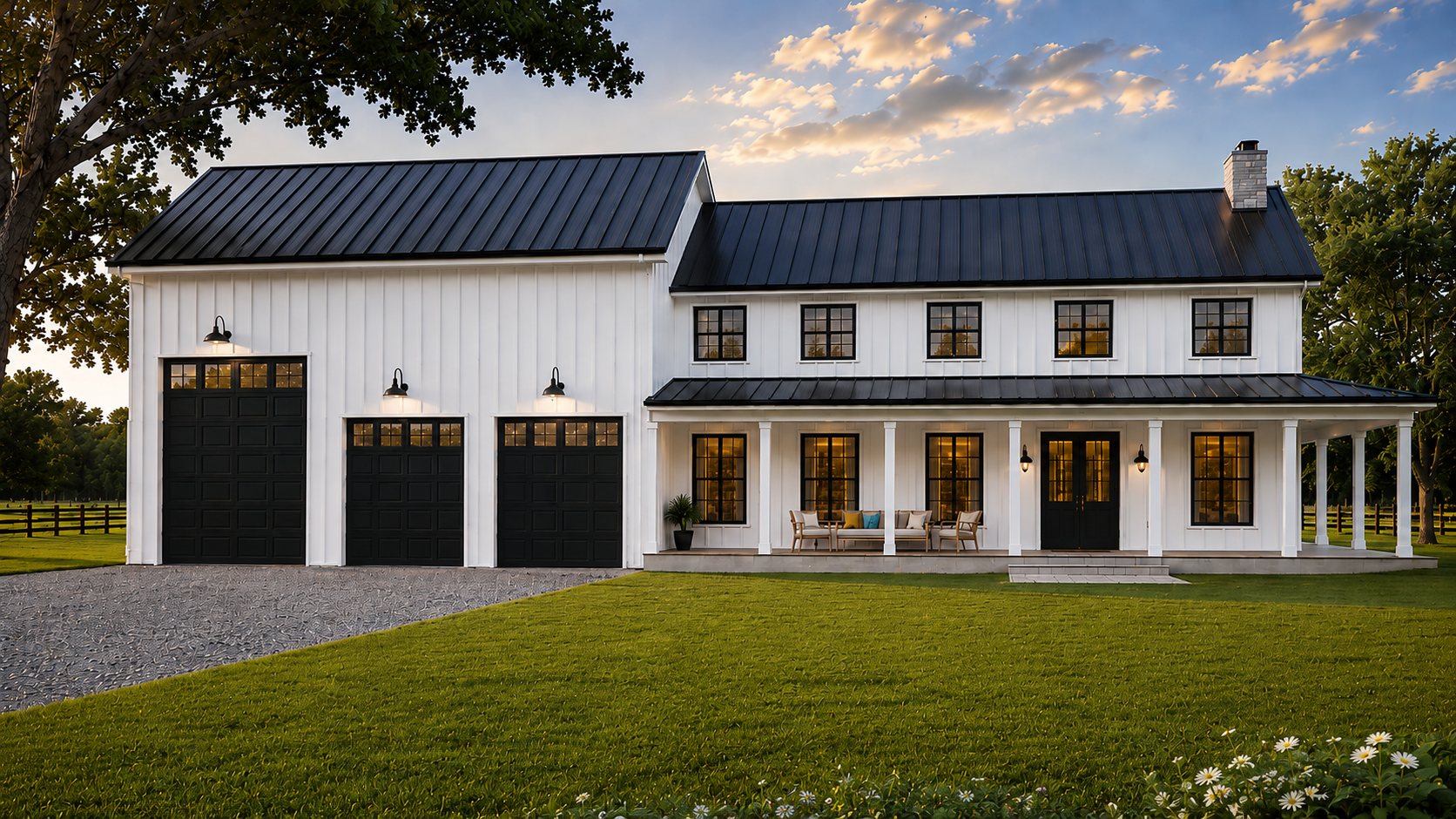
Barndominium Plans with RV Garages
Barndominium plans with RV garages are becoming more popular because more homeowners want a house that does more than provide living space. They want a home that can protect a motorhome, camper, fifth wheel, boat, trailer, side-by-side, work truck, or oversized vehicle without needing a separate storage building.
An RV garage can be one of the most useful upgrades in a barndominium plan, especially if you are building on land, acreage, a lake property, a retirement property, or a rural homesite. Instead of paying for off-site RV storage or leaving an expensive camper exposed to weather, a barndominium with an RV garage gives you convenient storage right at home.
The key is planning the RV garage correctly from the beginning. An RV bay is not the same as a standard garage. It needs the right door height, ceiling clearance, bay depth, driveway access, slab design, electrical planning, and overall layout. If you try to add it later, it can become expensive or impossible without major design changes.
If you are still comparing layouts, start by browsing all barndominium plans to see how different home sizes, garages, shops, porches, and bedroom counts compare before choosing the right RV-friendly design.
What Is a Barndominium Plan with an RV Garage?
A barndominium plan with an RV garage is a residential floor plan that includes an oversized garage bay designed to store a recreational vehicle or other large vehicle. The RV garage may be attached to the main home, built into the same structure, connected by a breezeway, or designed as part of a larger shop or garage area.
An RV garage may be used for:
- Motorhomes
- Fifth wheels
- Travel trailers
- Campers
- Boats
- Utility trailers
- Car haulers
- Work trucks
- Classic cars
- Side-by-sides and ATVs
- Large tool or equipment storage
Some homeowners use the RV garage only for storage. Others use it as a hybrid space for vehicles, tools, hobbies, mechanics, woodworking, camping gear, or seasonal equipment.
Why Barndominiums Work So Well with RV Garages
Barndominiums are a strong fit for RV garages because they are often designed with flexible footprints, open-span construction, large garages, shops, and rural land use in mind. Unlike many traditional house plans, barndominiums can more naturally combine living space and oversized storage.
Barndominiums work well with RV garages because they can offer:
- Large rectangular footprints
- Flexible garage and shop placement
- Higher wall heights where needed
- Simple rooflines
- Easy connection to mudrooms or utility rooms
- Room for wide driveways
- Better compatibility with acreage or rural lots
- Options for attached, detached, or breezeway garages
For homeowners who travel often, own a camper, or want serious storage, an RV garage can make the barndominium much more useful long term.
Benefits of Barndominium Plans with RV Garages
Protects Your RV from Weather
An RV is a major investment. Leaving it outside can expose it to sun, rain, snow, hail, wind, tree debris, fading, roof wear, and long-term exterior damage. An RV garage helps protect the vehicle from the elements.
Saves Money on Off-Site Storage
Many RV owners pay for off-site storage. A barndominium with an RV garage can reduce or eliminate that recurring cost while keeping the RV more convenient to access.
Keeps Gear Organized
RV owners usually have more than just the vehicle. Camping chairs, hoses, tools, grills, coolers, outdoor rugs, bikes, fishing gear, hunting gear, and maintenance supplies all need storage. An RV garage can keep everything in one place.
Adds Long-Term Flexibility
Even if you sell the RV later, the garage can still be used for boats, classic cars, trailers, tractors, side-by-sides, storage, workshops, or hobby space.
Improves Convenience
Having the RV at home makes packing, cleaning, charging, loading, and maintaining it much easier. You can prepare for a trip without driving back and forth to a storage facility.
How Big Should an RV Garage Be?
The right RV garage size depends on the vehicle you own now and the vehicle you may own in the future. Do not design the garage around a “close enough” measurement. RVs need extra clearance for mirrors, roof equipment, slide-outs, ladders, walking space, storage, and future upgrades.
Important measurements include:
- RV length
- RV width
- RV height
- Door height
- Door width
- Interior ceiling height
- Bay depth
- Driveway turning space
- Room for slide-outs, if needed
- Storage space around the vehicle
A garage that technically fits the RV may still be frustrating if there is no room to open doors, walk around the vehicle, store gear, or work on maintenance.
Common RV Garage Door Sizes
Standard residential garage doors are usually too small for RVs. Many RV garage bays need taller and wider doors than a typical 2-car garage.
Common RV garage door sizes may include:
- 12 feet wide by 12 feet tall
- 12 feet wide by 14 feet tall
- 14 feet wide by 14 feet tall
- 14 feet wide by 16 feet tall
- Custom sizes for larger motorhomes or specialty vehicles
The right size depends on the RV. Always measure the actual vehicle and allow extra clearance. If you plan to upgrade to a taller motorhome or fifth wheel later, design for the future instead of only what you own today.
How Deep Should an RV Garage Be?
Garage depth is just as important as door height. Many RVs, trailers, and fifth wheels are much longer than standard vehicles.
Common RV garage depths may include:
- 35 feet for smaller campers or trailers
- 40 feet for many travel trailers
- 45 feet for larger trailers or smaller motorhomes
- 50 feet or more for larger motorhomes, fifth wheels, or extra storage
If you want storage shelves, a workbench, tool cabinets, freezer space, or walking room behind the RV, add more depth. A 45-foot RV bay may sound large, but it can feel tight once the vehicle and gear are inside.
Ceiling Height for an RV Garage
Ceiling height is critical. The garage needs enough interior clearance for the RV itself, the garage door track, lighting, openers, ceiling fans, storage racks, and any roof-mounted equipment on the RV.
Common RV garage ceiling heights include:
- 14-foot walls for many RV-friendly garages
- 16-foot walls for larger motorhomes or extra clearance
- Higher custom walls for specialty vehicles or lifts
Do not only measure the vehicle height. Account for the garage door system, structure, lighting, and future needs.
Best Barndominium Layout Ideas with RV Garages
1. Attached RV Garage
An attached RV garage connects directly to the main home. This is convenient because you can walk from the house into the garage without going outside.
An attached RV garage works well if you want:
- Easy access from the home
- Direct connection to a mudroom
- Convenient storage
- Protection from weather
- A single coordinated roofline
The main challenge is scale. RV garages are tall, and if they are not designed carefully, they can overpower the front elevation. The plan needs good exterior balance so the home still looks residential.
2. Side-Entry RV Garage
A side-entry RV garage places the large garage door away from the front of the home. This can improve curb appeal and make the barndominium feel less garage-dominated.
This layout works well when the land has enough width for a side driveway and turning space. It can also help keep the front elevation cleaner and more attractive.
3. Breezeway-Connected RV Garage
A breezeway-connected RV garage gives you separation from the main living area while still keeping the garage connected. This can be a great option if you want to reduce noise, fumes, and visual bulk near the home.
A breezeway layout can work well for:
- Large garages
- RV bays
- Detached shops
- Guest suites above the garage
- Homes where curb appeal matters
The breezeway can also create a covered walkway, mudroom entry, or outdoor transition space between the house and garage.
4. RV Garage with Shop Space
Many homeowners want the RV garage to do more than store a vehicle. Adding shop space allows the garage to function as a work area, tool room, hobby space, or storage zone.
A shop area can include:
- Workbench wall
- Tool cabinets
- Utility sink
- Storage shelves
- Compressor area
- Extra outlets
- Overhead lighting
- Parts and supply storage
If you plan to use the garage as a shop, make sure the electrical layout, lighting, ventilation, and storage are planned early.
5. RV Garage with Guest Suite
Some barndominium plans place a guest suite, bonus room, bunk room, or apartment-style space near or above the RV garage. This can be useful for visiting family, adult children, guests, or vacation properties.
A guest suite near the RV garage can include:
- Bedroom
- Bathroom
- Sitting area
- Private entrance
- Small kitchenette, where allowed
- Storage space
This type of layout needs careful planning for stairs, access, plumbing, HVAC, privacy, and local code requirements.
Should the RV Garage Be Attached or Detached?
Both attached and detached RV garages can work. The best choice depends on your land, budget, driveway, exterior style, and how often you use the RV.
Attached RV Garage Advantages
- Convenient access from the home
- Better weather protection
- Can connect to mudroom or laundry room
- Can share some utilities with the home
- Feels integrated into the main property
Attached RV Garage Drawbacks
- Large garage doors can dominate the elevation
- More noise near the house
- Potential vehicle fumes if not separated properly
- May require more careful fire separation
- Can complicate rooflines and exterior design
Detached RV Garage Advantages
- Better separation from the home
- Less garage noise near living areas
- More flexibility on placement
- Can be built later in some cases
- Can function as a separate shop or storage building
Detached RV Garage Drawbacks
- Less convenient in bad weather
- May require separate utility runs
- May cost more if built as a separate structure
- May need additional permits
- Requires more land and driveway planning
If you want convenience, attached may be better. If you want separation, flexibility, and less visual bulk, detached or breezeway-connected may be the better choice.
How Much Does a Barndominium with an RV Garage Cost?
The cost of a barndominium with an RV garage depends on the size of the home, size of the garage, wall height, door size, foundation, building system, finish level, land, utilities, labor, and local code requirements.
Finished living space usually costs more per square foot than garage or shop space because living areas include insulation, HVAC, plumbing, drywall, flooring, cabinets, bathrooms, kitchens, fixtures, and interior finishes.
An RV garage may cost less than finished living space, but it still requires:
- Concrete slab
- Framing or steel structure
- Roofing and siding
- Large garage door
- Man doors
- Electrical
- Lighting
- Insulation, if desired
- Heating or cooling, if desired
- Driveway and apron
- Permits and inspections
The biggest cost drivers are height, door size, garage depth, structure, insulation, electrical needs, and whether the garage is finished, heated, cooled, or used as a shop.
RV Garage Cost vs. Finished Living Space
One of the biggest mistakes buyers make is pricing garage space the same as finished living space. These areas usually have very different costs and functions.
Finished living space may include:
- Interior walls
- Drywall
- Flooring
- Cabinets
- Countertops
- Bathrooms
- Kitchen finishes
- HVAC
- Plumbing
- Interior trim
RV garage space may include:
- Concrete
- Large doors
- Basic electrical
- Lighting
- Open wall space
- Storage
- Optional insulation
- Optional heating or cooling
When budgeting, separate the home, garage, shop, porch, site work, utilities, and finishes. That gives you a much clearer picture of the real project cost.
Best Home Sizes for Barndominiums with RV Garages
A barndominium with an RV garage can be small and efficient or large and custom. The right size depends on your family, vehicle, land, and budget.
2-Bedroom Barndominium with RV Garage
A 2-bedroom layout can work well for retirees, couples, vacation homes, or downsizers who want more garage space than bedroom space.
3-Bedroom Barndominium with RV Garage
A 3-bedroom layout is one of the most practical options for families. It gives you enough bedrooms while still allowing room for a large garage or RV bay. If this is the layout you are leaning toward, browse 3-bedroom barndominium plans for ideas on how family layouts can be arranged.
4-Bedroom Barndominium with RV Garage
A 4-bedroom layout is ideal for growing families, guests, home offices, and long-term flexibility. The RV garage can be attached, detached, or paired with a larger shop.
Large Barndominium with RV Garage and Shop
Larger barndominiums can include finished living space, an RV garage, a workshop, equipment storage, a mudroom, a home office, guest space, and covered porches. This is often the best option for acreage, homesteads, and retirement properties with serious storage needs.
Best Features to Include in an RV Garage
An RV garage should be more than a tall empty bay. The best designs include features that make storage, travel prep, and maintenance easier.
Useful RV garage features include:
- Extra-deep bay
- Oversized garage door
- High ceilings
- Strong lighting
- Multiple electrical outlets
- RV electrical hookup
- Water access
- Floor drain, where allowed
- Utility sink
- Storage shelves
- Tool cabinets
- Workbench
- Ventilation
- Dedicated gear storage
Not every RV garage needs every feature, but the more you use your RV, the more these details matter.
Driveway Planning for an RV Garage
Driveway access is one of the most overlooked parts of RV garage planning. Even if the garage is large enough, the driveway must allow the RV to enter and exit safely.
Before finalizing the garage location, consider:
- Turning radius
- Driveway width
- Driveway slope
- Garage door angle
- Road approach
- Backing distance
- Pull-through possibilities
- Parking space for guests or other vehicles
A side-entry RV garage may look better from the road, but it needs enough room for a large vehicle to turn. A front-entry RV garage may be easier to access, but it can dominate the front elevation if not designed carefully.
Can an RV Garage Be a Pull-Through Garage?
Yes, a pull-through RV garage can be a great option if the land allows it. A pull-through garage has a large door on both ends, allowing the RV to enter from one side and exit from the other without backing out.
Pull-through RV garages can be useful for:
- Large motorhomes
- Trailers
- Boats
- Equipment storage
- Farm or homestead use
- Properties with circular drives
The downside is cost and site planning. A pull-through layout requires more doors, more driveway space, and careful grading on both sides of the building.

Should an RV Garage Be Heated or Cooled?
Heating and cooling an RV garage depends on how you plan to use the space. If it is only for storage, full HVAC may not be necessary. If you plan to use the garage as a workshop, hobby space, or maintenance area, conditioning the space may be worth considering.
You may want heating or cooling if:
- You work in the garage often
- You store temperature-sensitive items
- You live in a very cold or hot climate
- You want a comfortable shop area
- You use the space for hobbies or business
Even if you do not condition the garage, insulation and ventilation can still make the space more comfortable and protect stored items.
Fire Separation and Safety
An attached RV garage should be designed with proper separation from the living space. Local building codes may require fire-rated walls, doors, drywall, ventilation, or other safety measures between the garage and home.
Safety considerations may include:
- Fire-rated separation between garage and living space
- Self-closing door to the home where required
- Carbon monoxide detectors
- Proper ventilation
- Safe storage for fuel or chemicals
- Electrical planning for RV hookups
- Code-compliant garage door installation
Always confirm local building requirements before finalizing an attached RV garage design.
Land Considerations for Barndominiums with RV Garages
An RV garage needs more land planning than a standard garage. The footprint may be wider, taller, and deeper, and the driveway needs more room for turning.
Before choosing a plan, check:
- Residential zoning
- HOA or deed restrictions
- Setback requirements
- Building height restrictions
- Driveway access
- Turning space
- Septic and well placement
- Utility locations
- Drainage
- Whether large garages or shops are allowed
Some neighborhoods may restrict RV storage, large garage doors, metal buildings, detached shops, or oversized garages. Always check local rules before buying land or finalizing a plan.
Exterior Design Tips for RV Garage Barndominiums
One challenge with RV garage plans is exterior balance. RV garage doors are large, and tall garage bays can make the building look more like a commercial shop if the exterior is not handled carefully.
To improve curb appeal, consider:
- Side-entry garage doors
- Covered front porch
- Board-and-batten siding
- Stone or wood accents
- Balanced window placement
- Different siding textures
- Warm exterior lighting
- Landscaping near the garage
- Roofline transitions that reduce visual bulk
A good RV garage barndominium should look like a home first, not just a storage building with living space attached.
Common Mistakes with RV Garage Barndominium Plans
Mistake 1: Designing the Garage Too Small
An RV garage should include extra clearance, not just the exact measurements of the vehicle. Account for mirrors, roof equipment, walking space, storage, and future upgrades.
Mistake 2: Forgetting Driveway Turning Space
The garage may be large enough, but the driveway still needs to let the RV enter and exit safely.
Mistake 3: Making the RV Door Dominate the Home
Large garage doors can overwhelm the exterior if they are placed poorly. Side-entry or separated garage layouts can help.
Mistake 4: Ignoring Electrical Needs
An RV garage may need dedicated outlets, RV hookups, shop outlets, exterior outlets, and strong lighting.
Mistake 5: Not Planning Storage
RV owners need room for more than the RV. Plan space for tools, hoses, gear, outdoor furniture, and seasonal items.
Mistake 6: Treating Garage Space Like Living Space in the Budget
Garage and living space usually cost different amounts. Budget them separately.
Mistake 7: Choosing the Plan Before Checking the Land
The land must support the footprint, height, driveway, setbacks, septic, well, drainage, and garage access.
Is a Barndominium with an RV Garage Right for You?
A barndominium with an RV garage may be right for you if you want a home that supports travel, storage, hobbies, vehicles, and rural living in one design.
This type of plan may be a good fit if:
- You own an RV, camper, fifth wheel, or motorhome
- You want to avoid off-site storage
- You need large vehicle storage
- You want a shop or hobby space
- You are building on acreage
- You want a retirement-friendly travel home base
- You need storage for boats, trailers, or equipment
- You want garage space designed from the beginning
If your RV is part of your lifestyle, the garage should not be treated as an afterthought. It should be one of the main design priorities.
Final Thoughts on Barndominium Plans with RV Garages
Barndominium plans with RV garages are a smart choice for homeowners who need serious storage, travel convenience, and a home that supports more than everyday living. An RV garage can protect your vehicle, reduce storage costs, organize gear, and add long-term flexibility to your property.
The best plans start with real measurements. Know your RV height, length, width, door clearance, driveway needs, and future storage goals before choosing a layout. Think about whether the garage should be attached, detached, breezeway-connected, side-entry, pull-through, heated, or combined with a shop.
Before building, make sure the land can support the footprint, setbacks, driveway access, utility layout, septic, well, and garage height. A well-planned RV garage can make your barndominium far more functional for years to come.
FAQ: Barndominium Plans with RV Garages
Can a barndominium have an RV garage?
Yes. A barndominium can include an attached RV garage, detached RV garage, breezeway-connected garage, pull-through garage, or RV bay combined with shop space.
How tall should an RV garage door be?
Many RV garage doors are 12 to 14 feet tall, but larger motorhomes or specialty vehicles may need taller doors. Always measure your RV and allow extra clearance.
How deep should an RV garage be?
Many RV garages need 40 to 50 feet or more of depth depending on the vehicle. Add extra space if you want storage, a workbench, or room to walk around the RV.
Can a 3-bedroom barndominium have an RV garage?
Yes. A 3-bedroom barndominium can work very well with an RV garage, especially if the garage is planned as an attached, detached, or breezeway-connected space.
Should an RV garage be attached or detached?
An attached RV garage is more convenient, while a detached garage gives more separation from noise, fumes, and visual bulk. A breezeway-connected garage can offer a good middle ground.
Can an RV garage include a shop?
Yes. Many RV garages also include shop space, tool storage, workbenches, utility sinks, extra outlets, lighting, and storage for camping or outdoor gear.
Does RV garage space cost the same as living space?
Usually not. Finished living space typically costs more per square foot because it includes full interior finishes, HVAC, plumbing, cabinets, bathrooms, and kitchens. Garage space should be budgeted separately.
Can an RV garage be heated and cooled?
Yes. Heating and cooling can be added if you plan to use the RV garage as a workshop, hobby area, or temperature-controlled storage space.
Do I need special land for a barndominium with an RV garage?
You need land that can support the larger footprint, driveway access, turning radius, setbacks, garage height, septic, well, drainage, and any local rules about oversized garages or RV storage.
Where should I start comparing layouts?
Start by browsing all barndominium plans so you can compare different garage styles, home sizes, porch layouts, shops, and bedroom counts before choosing a final plan.
```


